Terminal Operator Updates Port Equipment

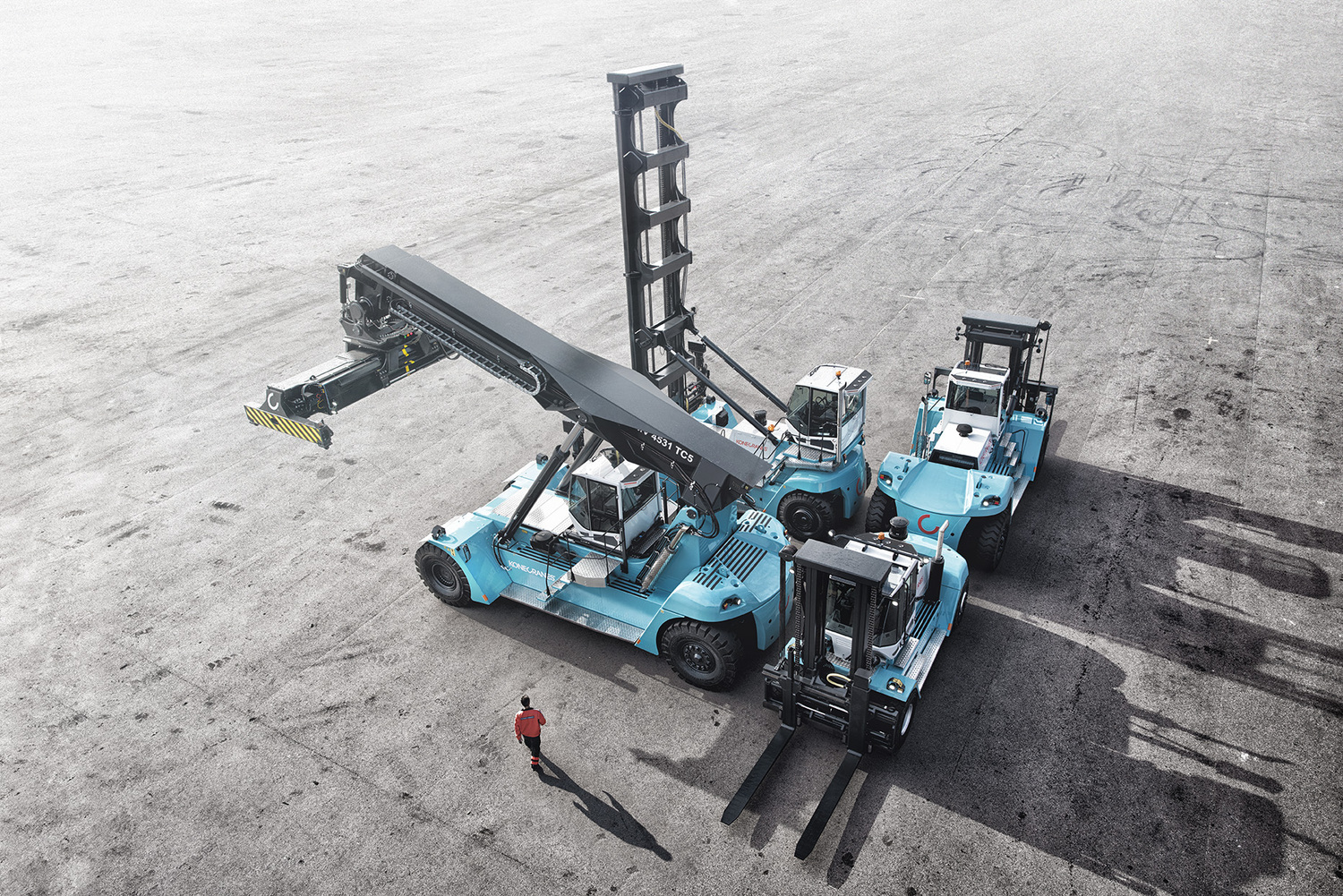
International terminal operator CoreX Ports & Terminals / Yilport Holding, Inc. has received 5 reach stackers, 5 empty container handlers and 9 forklifts to increase its container handling efficiency at terminals in Ghana, El Salvador, and Portugal. The trucks were ordered in batches throughout 2025 and are now in service.

CoreX Ports & Terminals / Yilport Holding operates 22 Marine and 5 inland terminals in 12 countries and relies on a fleet of container handling equipment to meet strict customer deadlines in a wide range of demanding environments. To keep up with demand, Yilport decided to replace older equipment at four of its terminals with 19 of the latest Konecranes lift trucks to ensure continued safe and efficient operations and maximum uptime.

“We appreciate Konecranes’ continued participation in our equipment purchase tenders and their responsiveness to our operational requirements. The addition of these reach stackers, empty container handlers, and forklifts further strengthens our equipment fleet across multiple regions, supporting higher productivity, operational resilience, and service reliability. As we continue to expand our global terminal network, investments in modern equipment remain a key driver in delivering efficient and competitive port services to our customers worldwide,” says Erhan Çiloğlu, Deputy CEO & CMO, Yilport Holding.

This delivery reflects Yilport’s confidence in Konecranes. We’re proud to have delivered the right solution with our Turkish distribution partner Portunus playing a key role to make this happen, supported by our unmatched global after-sales service through our distribution partner network

says John Elisson, Regional Director MEA, Lift Trucks, Konecranes.

The 5 reach stackers, 5 empty container handlers, and 9 forklifts meet a wide range of capacities and handling requirements at four terminals. For deeper insights, ‘TRUCONNECT Remote Monitoring’ will collect usage data and send it via secure mobile connection to the Konecranes customer portal, where Yilport can follow one truck, a group of trucks or its entire lift truck fleet around the world. With up-to-date information about truck performance, the port operator can analyze and optimize its operations.

Charging Challenges Stalling Fleet Electrification

A commercial vehicle rental specialist has launched a new whitepaper looking at why charging infrastructure is holding back electric vehicle adoption across the light commercial vehicle (LCV) sector.

The ‘Charging Ahead’ whitepaper, based on data from Dawsongroup’s EV Readiness Survey of fleet operators across the UK, uncovers a disconnect between perceived readiness and actual implementation.
While 53% of respondents believe their premises are suitable for EV charging infrastructure, only 27% have actually installed chargers on site. Meanwhile, 47% remain either unsure of their suitability or consider their premises unsuitable altogether.

In the report driving range is identified as the most important factor in EV selection for fleet managers (42%). For micro fleets running between one and ten vehicles, a single van falling short on range can throw an entire day’s operations into disarray.

“For smaller fleets, every vehicle is a workhorse. If one can’t deliver the expected range, it disrupts the entire operation,” said Sarah Gray (pictured, below), Head of ZEV Strategy and Development at Dawsongroup vans. Charging speed is also highlighted as a day-to-day challenge. Unlike private EVs, commercial vans run to tight schedules where slow charging translates directly into lost productivity. The whitepaper maintains that faster charging infrastructure is key to keeping vehicles on the road, with drivers able to top up during breaks rather than waiting for a full charge.

The findings show that 59% of drivers take their vehicles home overnight, which can create challenges around charging consistency and cost control.

“When vehicles are dispersed overnight, businesses lose control over charging consistency and cost management. It becomes harder to monitor energy usage and ensure vehicles are ready for the next day,” says Gray.

Despite 41% of fleets parking vehicles at their business premises overnight, on-site charging adoption remains surprisingly low. The whitepaper suggests that many businesses underestimate what installation involves.

“Many businesses underestimate the complexity of installation,” says Simon Ridley, Managing Director at Dawsongroup vans. “From assessing electrical capacity to managing costs and planning for future scalability. It’s not just about buying chargers; it’s about integrating them into the business model.”

The whitepaper recommends a practical, phased approach, starting with temporary or mobile charging solutions, carrying out site assessments to understand power availability, and building an infrastructure that can grow with the fleet.

The experts at Dawsongroup vans encourage businesses to combine real world vehicle trials and telematics to test EV performance against actual route demands, rather than just relying on manufacturer figures.

Next-Generation Snow-Class Reefer Fleet

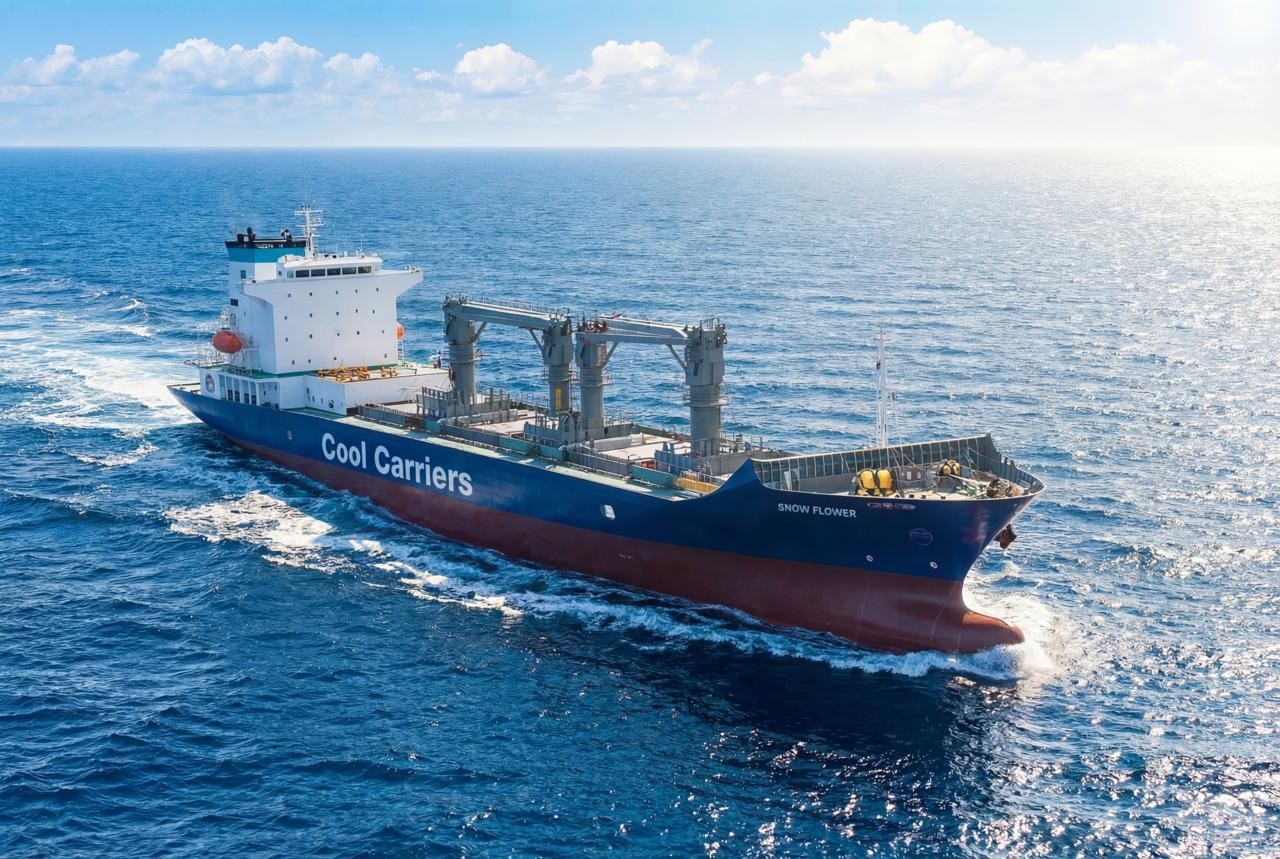
One of the world’s largest operators of specialized reefer vessels, Cool Carriers, is set to operate seven new ‘Type Reefer Carriers’ from Kitanihon Shipbuilding in Japan, and took delivery of the first vessel, ‘Snow Flower’, on 4th March. Each vessel is designed to safely carry 5,000 high-cube pallets of perishable fruit, along with up to 168 reefer containers, at a service speed of 18 knots. Two vessels have capacities of over 630,000 cubic feet, while five have capacities of 660,000 cubic feet.

All vessels will share the same specifications and form a new series, with deliveries scheduled from March 2026 through to 2028. The names draw inspiration from the company’s original and highly regarded Snow-class vessels.

The vessels will feature modern hull and propulsion designs, including energy-efficient engines engineered to meet stringent IMO and EU environmental regulations through to 2030 and beyond.

This order forms part of Cool Carriers’ ongoing fleet renewal strategy, ensuring continued competitiveness in the specialized reefer segment. Following this order, the company will have a total of 7 vessels on order, with 2 scheduled for delivery in the remainder of 2026.

Cool Carriers is both an owner and a time-chartered fleet operator, which includes leasing vessels from Japanese owners. The company’s expanding fleet represents a significant increase in reefer capacity, with vessels capable of carrying up to 14,000 pallets under deck and in containers combined.

Cool Carriers serves key global trade routes, including New Zealand to Europe (Kiwi fruit), Chile to the United States, Ecuador’s banana exports, and growing volumes from South Africa and Argentina to Europe.

As global demand for year-round fresh produce continues to rise the company plays a vital – if often unseen – role in maintaining resilient food supply chains. The introduction of the Snow-class vessels will further improve both delivery reliability and environmental performance.

Glenn Selling, Chief Operating Officer at Cool Carriers, said, “Cool Carriers is proud to introduce the Snow class. With a 2.5-metre deck height, these vessels represent a major step forward for the specialized reefer industry. Exporters will no longer need to choose between standard and high-cube pallets – the new vessels are designed entirely for high-cube cargo, matching the internal height of modern reefer containers.”

Windsor Framework Freight Discussions

The British International Freight Association (BIFA) recently met with representatives from the European Commission in Brussels to discuss the operation of the Windsor Framework and its impact on the movement of goods between Great Britain and Northern Ireland.

The meeting formed part of ongoing engagement between industry and policymakers to assess how the post-Brexit trading arrangements are functioning in practice and to identify areas where processes could be improved for freight forwarders and their customers.

Representing BIFA was Pawel Jarza from the association’s Policy and Compliance team, who highlighted the operational realities faced by members when moving goods across the Irish Sea. While the Windsor Framework has simplified certain procedures, such as removing the requirement for export declarations on goods moving from Great Britain to Northern Ireland, freight forwarders continue to navigate a complex trading environment.

Key challenges discussed included the need to operate between two tariff regimes and determine whether goods are considered ‘at risk’ of entering the EU market. Additional requirements, including safety and security declarations and the implementation of systems such as Import Control System 2 (ICS2), also contribute to the complexity of border processes.

The discussion also addressed issues surrounding the movement of small parcels and lower-value consignments, where the detailed provisions of the framework can create practical difficulties for operators.

BIFA used the meeting to relay feedback from its members and emphasised the importance of continued dialogue between industry and regulators to ensure the framework works as effectively as possible.
Commenting after the meeting, Jarza encouraged members that trade between Great Britain and Northern Ireland to continue sharing their experiences.

“Freight forwarders operate at this border every day and have first-hand knowledge of what works and what does not,” he said. “If members encounter systemic issues, it is important that they let us know so we can raise these with government departments and the European Commission, and where possible propose practical solutions.”

BIFA will continue to gather feedback through its regional engagement in Northern Ireland and ongoing discussions with members to support improvements to the operation of the Windsor Framework.

Mainova Consolidates Spare Parts in new DC

With the construction of a new Regional Warehouse in Frankfurt’s East, German utility supplier Mainova AG is consolidating its previously decentralised spare parts logistics at a single location. The goal is to increase the availability of spare parts for the technical infrastructure while simplifying logistics processes.

Jungheinrich is implementing a new Regional Warehouse East for Mainova in Frankfurt-am-Main to supply spare parts for the company’s technical infrastructure. The central element of the new warehouse solution for the energy supplier – who supplies more than one million people with electricity, gas, heat and water – is a narrow-aisle warehouse with around 6,200 pallet storage spaces and a rack height of up to 17.1 metres. Two Jungheinrich EKX 516 trilateral trucks will be used for storage and retrieval operations, enabling economical operation even at great lifting heights thanks to their high positioning accuracy and energy-efficient drive technology.

The pallet warehouse is complemented by a small parts warehouse with a storage height of 7.5 metres. A total of eleven Jungheinrich vertical lift modules ensure compact goods-to-person picking and short access times – a decisive factor for the rapid provision of spare parts when required, even with a high variety of items.

In addition, Mainova is integrating a wide-aisle warehouse into the new hall complex. Handling operations are carried out by an EFG 425k electric four-wheel counterbalance truck. In the ten-metre-high hall section, double-deep pallet racking is also installed and operated by the EFG using telescopic forks.
Cantilever racking for the storage of long goods is installed both in the new building and in a neighbouring existing hall. While the cantilever rack in the new building is also served by the EFG 425k, Jungheinrich, acting as general contractor, is supplying a specialist vehicle from Hubtex for handling the cantilever racks in the existing hall, thus also integrating this area seamlessly into the overall concept.

A separate hazardous materials storage area with manually operated shelving is also being set up in the new hall, where materials such as oils and paints will be stored. In total, three newly interconnected hall sections with heights of 25, 10 and 5 metres, along with an additional existing hall, are being equipped with warehouse technology. The hall sections are designed to ensure continuous material flow without structural interruptions.

“With the new regional warehouse, we are significantly increasing the efficiency and supply reliability of our spare parts logistics while making optimal use of the existing property,” says Leonid Feldman, Project Manager and Civil Engineer/Architect at Mainova AG.

“The solution by Jungheinrich maps our very diverse storage requirements – from small parts to long goods – within a single integrated system, creating the basis for fast and reliable processes,” adds Sascha Kaden, Head of Warehouse Management and future user of the facility.

The contract was awarded following an EU-wide tender procedure in which Jungheinrich emerged as the best bidder based on objective award criteria, building on the successful cooperation between the two companies in recent years. Jungheinrich had already implemented two smaller warehouse projects for Mainova in 2022, demonstrating its expertise as a system provider. The new regional warehouse is scheduled to go live in March 2027.

Subscribe

Get notified about New Episodes of our Podcast, New Magazine Issues and stay updated with our Weekly Newsletter.