Carlsberg Britvic Adds Trailers to its Fleet

Beer and soft drinks powerhouse Carlsberg Britvic has changed supplier for the manufacture of thirty-seven new trailers for its primary logistics operations, replacing older vehicles. The order placed with Tiger Trailers was split into a trio of fixed double decks with wraparound rear curtains, and thirty-four single deck trailers which are also curtainsided.


Sarah Perry, VP Customer Supply Chain at Carlsberg Britvic, comments: “In addition to Tiger’s reputation for high quality products and strong customer service, we were also impressed by its sustainability agenda – which includes investing in energy efficiency, planting one tree for every trailer ordered, and its community road safety activities. We are very pleased with the finished vehicles.”


Carlsberg Britvic’s thirty-four new single deck Tiger curtainsider trailers showcase bold liveries spanning Pepsi MAX, Lipton Ice Tea, 7UP, 1664, Robinsons, Tango, Birrificio Angelo Poretti, J2O, and Carlsberg Danish Pilsner, highlighting the recently formed business’ sizeable portfolio of beverage brands. The new designs offer a taste of Carlsberg Britvic’s extensive portfolio of 41 brands which includes premium beer and cask ale, plant-powered juice shots and iced coffee, sugar free soft drinks and alcohol-free brews. These trailers will primarily transport bottles and cans, and at times will carry large-pack loads such as kegs and casks, delivering to internal sites, NDCs, RDCs, wholesalers, supermarkets, larger festivals, and sports grounds.


The three Hobgoblin-branded double deck trailers have both a fixed three-quarter-length main deck rated at ten tonnes with Expamet steel flooring for added safety and durability, and an additional fixed deck above the neck area, rated at four tonnes. Cargo is secured using three full-height nets fitted to each side, with transverse netting enabled by the under-deck tracks. These trailers will move just-in-time stock around the network for next-day deliveries, from the primary logistics hubs to the secondary operations satellite sites, where transport is taken over by a 300-strong fleet of rigids from 3.5t vans to 26t trucks, delivering to pubs, clubs, sporting venues and small festivals.


Tiger tailors its products to meet each customer or end user’s requirements, and in this instance the drinks firm specified flush-fitting rear doors, various additional grab handles and straps to raise operator safety, plus added vehicle durability through galvanised components and extra buffers.


Thomas Stott, Key Account Director at Tiger Trailers, says: “Manufacturing trailers for transporting some of the world’s best-known alcoholic and soft drinks is a privilege and we’re very pleased to welcome Carlsberg Britvic as a Tiger customer following their tendering decision to choose us as their new supplier for these build contracts. The new liveries they designed for these latest curtainsiders look fantastic. We look forward to supporting the Carlsberg Britvic team going forward with our range of aftercare services.”

Carlsberg Britvic’s thirty-seven new Tiger trailers entered the drinks firm’s network via its Burton-on-Trent site initially, with the double decks set to haul between internal secondary depots, and the single decks destined for duty anywhere from Scotland to Cornwall, joining its primary logistics fleet comprised 50 tractor units, 120 trailers and 8 tankers.

Delivered Duty Paid Services help Exports

Europa Road has confirmed that UK exporters have transitioned smoothly to its new Delivered Duty Paid (DDP) services following the abolishment of one-off tax representation in France for non-EU businesses which came into force on 1 January and is yet another damaging effect of Brexit.

Leading provider of acoustic solutions, Allaway Acoustics, is a prime example of a UK-based business that would have been severely impacted by the new French legislative requirements. Allaway provides materials for data centres across the EU – with bespoke acoustic solutions to control noise emissions from power generation and cooling equipment. A third of Allaway’s business is with European markets, including large projects in Germany, Netherlands and France, so any delays could have a significant financial impact.

The new rules require UK exporters shipping goods into the EU (via France) under DDP terms to hold a French VAT number. Alternatively, the EU importer can appoint Europa to zero-rate the import VAT on their behalf.

At the end of 2025, confusion around these new French regulations was rife and threatened to undermine British exporters’ confidence in European trade. While the changes generated widespread concern in the run-up to their launch, Europa’s customers have continued trading with minimal disruption.

Faced with the challenges of these new French regulations, Europa offered early intervention to all its customers, including Allaway, and outlined the options available to ensure its EU customers didn’t face disruption or delays.

Drawing on its experience with 100 in-house customs specialists working across the EU and UK, Europa expanded its DDP Flow services to offer a choice between: ‘DDP Flow – Importer’s Signature’ and ‘DDP Flow – Own French VAT Number’. It’s early days, but to date the company reports equal numbers of its customers choosing each option, reflecting their differing operational and commercial needs.

Allaway considered both DDP Flow options and, with Europa’s support and guidance, opted for ‘DDP Flow – Own French VAT Number’. This option reduced the impact on Allaway’s customers and, with Europa’s support, the company was able to secure their French VAT number in time to send its first shipments in the New Year.

Sam Giles, Head of Logistics at Allaway Acoustics, commented: “The news of Regime 42 was widespread, which made it all feel daunting. However, Europa supported us every step of the way, clearly outlining the options available and how this would all affect our customers. On paper, the ‘DDP Flow – Importer’s Signature’ option seemed like the best solution for us, but with further advice we found the ‘DDP Flow – Own VAT Number’ would ensure ‘business as usual’ for our customers.

“Initially, I struggled to know our best option but with the hands-on approach the Europa team provided, it made our options clear and ensured I fully understood each process from start to finish. Europa supports our largest projects, which meant we really had to get this right. As we support fast paced and high-profile building projects in the EU with our bespoke acoustic solutions, timing is everything.”

Andrew Baxter, Chief Executive Officer at Europa said “Early on there was a great deal of confusion in the market including incorrect claims that British exporters would lose access to Regime 42. Our focus was to provide clarity and choice so customers could continue trading with confidence. Though some customers were more prepared that others, our branch teams across the county have worked hard to minimise any challenges they faced, ensuring we provide the fastest and best value for customers.

“We’re pleased to be able to support major UK exporters, such as Allaway and help them navigate the best solution to keep goods flowing.  The fact that exporters have adopted both solutions shows the importance of flexibility. What matters is that goods are continuing to move seamlessly across borders.”

AI-Powered IT Transformation for Kalmar

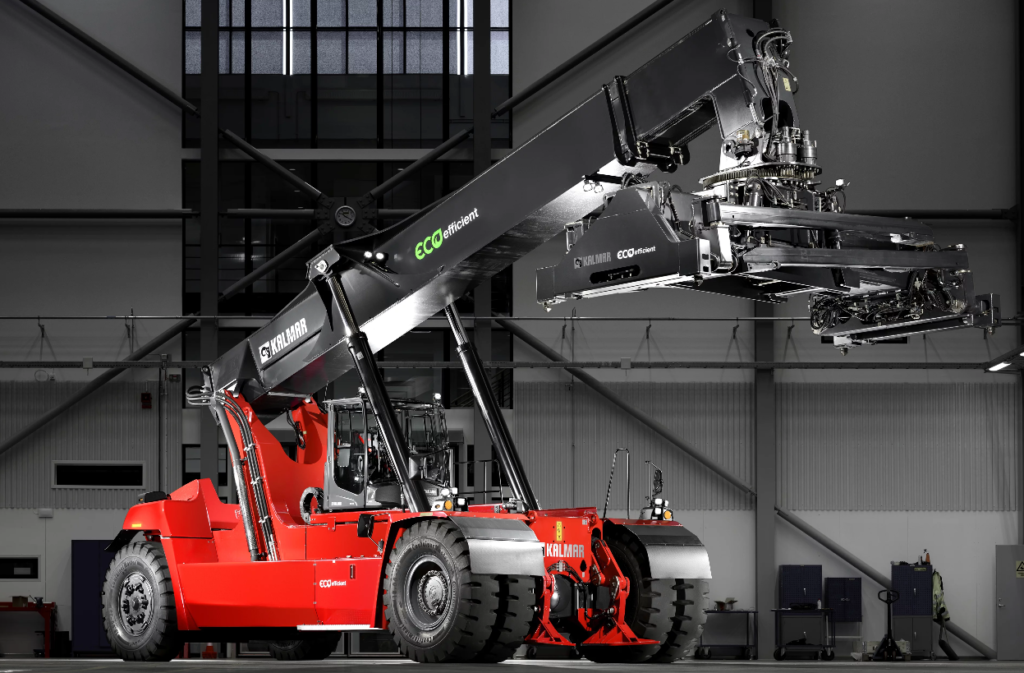
Tata Consultancy Services has been selected by Kalmar Oyj, a global manufacturer of heavy material handling equipment and services, as its strategic IT partner to spearhead a full IT service transformation.


To enable Kalmar to operate even more efficiently, TCS will help establish a modern, integrated, AI-powered, digital core IT foundation that will reduce costs while enhancing agility and efficiency. As per the partnership, TCS will consolidate Kalmar’s IT landscape into a single integrated delivery model spanning application maintenance and development services, end-user service, and infrastructure and hybrid cloud operations. TCS will introduce an AI-driven operations framework and a unified command center to enhance observability, strengthen service reliability, and reduce operational complexity across Kalmar’s global footprint. As part of the collaboration, TCS will also enhance the digital experience of Kalmar’s 5,200 employees by using AI to support better human-machine collaboration. By driving continuous innovation, TCS will enable Kalmar to remain a perpetually adaptive enterprise.


Tero Lehtonen, CIO, Kalmar said, “Our decision to partner with TCS is built on the confidence gained from a successful history of collaboration. We are convinced by the ability of TCS in establishing a modern, agile, and AI-first IT foundation for Kalmar. Our collaboration is among the key enablers to achieving our strategic goals.”

Subhadipta Samantray, Country Head, TCS Finland said, “Kalmar’s decision to partner with TCS as its strategic IT services provider is a strong endorsement of our ability to support global organizations through comprehensive, post-separation transitions and build the digital foundations of their future. With our deep contextual knowledge, strong local presence, delivery expertise along with global AI-leadership, we look forward to supporting Kalmar with enhanced operations, and continuous digital innovation for the years ahead.”


Arun Pradeep Surendra Mohan, Business Head – Travel & Logistics, EMEA, TCS said, “Our focus for Kalmar is to build a resilient, AI-first digital core that delivers agility, reliability, and scale. By combining deep contextual knowledge with TCS’ AI expertise and an integrated IT delivery model, we will help simplify Kalmar’s global IT landscape, strengthen operational resilience, and enhance employee experience enabling continuous innovation and strengthen long-term competitiveness.”


TCS has had a presence in the Nordic region since 1991, and its 20 000 consultants serve clients in Finland, Sweden, Denmark, and Norway. Deeply rooted in innovation, TCS PaceTM Studio in Stockholm offers its Nordic customers exclusive access to its PaceTM ecosystem.

How will Europe’s Fleet Management Transform?

The fleet management industry is undergoing rapid change. From digitalisation and sustainability mandates to evolving commercial pressures and the global expansion of connected mobility technologies, the next 12–24 months will be a defining period for fleet operators across Europe and beyond. The latest European industry reports collectively illustrate a sector coming to grips with technology, regulation and operational necessity, according to vehicle connectivity and fleet management solutions provider Cubic3.

The Forces Shaping Fleet Strategy

According to a recent industry overview, a survey of over 1,800 fleet decision-makers across 15 countries highlights four principal trends for the upcoming year. These priorities reflect both operational imperatives and broader shifts in corporate and public policy environments.

Key among them are the acceleration of electrification, the heightened emphasis on safety and compliance, the deeper adoption of telematics and data analytics, and the strategic optimisation of vehicle utilisation. Across haulage, delivery, car sharing and corporate fleets alike, these trends are no longer abstract objectives but day-to-day operational pressures.

Electrification and sustainability continue to dominate strategic planning for fleet directors. The combination of EU regulatory pressure, nationwide emissions zones, and corporate net-zero commitments is transforming fleet composition and management practices. Electric vehicle (EV) adoption is no longer simply a vehicle-type choice; it requires fleet managers to integrate dedicated EV-focused tools, for example, battery health monitoring, charger-aware routing and energy usage optimisation, into broader operational systems. These capabilities are emerging as essential components of any modern fleet strategy, particularly as fleets accelerate toward zero-emission targets while maintaining service reliability and cost control.

European Market Expansion Against a Global Backdrop


As Europe’s fleet management ecosystem evolves, the global market is expanding rapidly. The latest MarketsandMarkets report projects that the global fleet management market will grow from an estimated USD 37.71 billion in 2025 to USD 70.26 billion by 2030 at a compound annual growth rate (CAGR) of roughly 13.3 per cent. Growth drivers include the expanding footprint of commercial vehicle fleets in logistics, utilities, and field service operations, as well as a growing imperative to improve cost control and regulatory compliance.

Europe is distinctive both in its maturity and its aspirations. Recent European fleet industry reports forecast significant regional uptake of fleet management systems, with the installed base of active systems set to grow markedly through the end of the decade. One strategy forecast suggests that fleet management systems in Europe could increase from 18.1 million active units in 2024 to approximately 30.5 million by 2029.

In fact, independent analysis highlights Europe’s own fleet management market expanding from an estimated USD 11.82 billion in 2025 to USD 21.90 billion by 2030. This is supported by a robust 13.1 per cent CAGR and reflects the combination of regulatory complexity, rising EV penetration, and fleet operators’ increasing demand for real-time data, automation and integrated cost management.

Technological Drivers: Telemetry, Data and Automation

At the heart of this transformation is technology. Fleet management systems, once an optional extra for larger enterprises, are now central to operational efficiency for fleets of all sizes. These systems integrate telematics, IoT sensors, GPS tracking, and analytics engines to deliver comprehensive visibility over vehicle performance, driver behaviour, route optimisation, and compliance reporting. This data-rich environment enables predictive maintenance, more intelligent routing, reduced fuel and energy costs, and improved safety outcomes. For haulage and delivery operators working on increasingly tight margins, these capabilities directly impact profitability and service reliability.

Cloud-based fleet management platforms are also gaining traction because they offer the scalability, secure access and real-time updating capabilities that today’s distributed and multi-national fleets require. These platforms allow fleet managers to respond dynamically to shifting conditions, integrate with back-office systems, and ingest large volumes of operational data without the constraints of legacy on-premises infrastructure.

Commercial and Regulatory Imperatives


Beyond technology, fleet management in Europe is shaped by commercial pressures and regulatory frameworks. Urban low-emission zones, congestion charges, and evolving safety standards demand granular reporting, compliance tracking, and automated policy enforcement at the vehicle- and driver-level. This environment is forcing operators to adopt tools that can ensure regulatory alignment at scale.
Commercial logistics fleets, particularly those operating in last-mile and cross-border markets, are actively investing in systems to improve reliability, reduce carbon emissions, and enhance customer service. The growth of e-commerce and same-day delivery models has pushed efficiency to the top of the agenda, making advanced route planning and performance monitoring core investible functions.

From Fuel Cards to Intelligent Fleet Payments

To successfully deliver this transformation, fleet managers face persistent challenges: fragmented systems, disconnected data and limited visibility across fuel spend. Fuel price volatility, fraud risk and the expansion of EV charging and tolling networks have increased pressure on fleet operations in the future.

FleetWallet3 by Cubic3 helps fleet operators regain control of one of their most vulnerable cost centres: in-vehicle payments. Traditional fuel cards are prone to fraud and inefficiency, whereas FleetWallet3’s cloud-based, AI-enabled platform links directly to telematics data to enable secure, real-time transactions.

By analysing live vehicle and journey data, FleetWallet3 can detect and prevent anomalous spending before losses occur, while providing clear visibility into fleet-wide expenditure. With automated workflows and PSD2-compliant security, fleet managers can manage fuel, tolls and mobility services from a single dashboard, improving cost control and operational efficiency at scale.

Outlook: What Comes Next for Fleet Leaders


This year, Europe’s fleet ecosystem faces both opportunities and hurdles. The ongoing integration of EVs presents clear sustainability benefits but requires investment in charging infrastructure and sophisticated energy management tools. The rapid expansion of connected vehicle data streams offers unprecedented insights, yet raises questions around data governance, cybersecurity and interoperability. Moreover, as AI and machine learning continue to mature, they will increasingly shape fleet decision-making, from predictive diagnostics and automated route optimisation to real-time spend control and intelligent payment authorisation.

Fleet managers who align strategic priorities with robust, integrated technology platforms will be best positioned to navigate this environment. As digitalisation, sustainability mandates and financial accountability converge, fleet management is evolving from a logistical function into a strategic enabler – one where payments, data and operational intelligence must work seamlessly together.

Cold Chains Reducing Food and Pharma Waste

Data is the way forward, in order for cold chains to reduce unnecesssary waste, says Arindam Roy, Vice President, Client Partner at Straive.

Food and medical waste are crippling both our people and planet. A shocking 40% is believed to be lost along the value chain, and the consequences for the environment and communities are staggering.

The question, though, shouldn’t just be about how these goods get from A to Z. Other variables, like storage equipment conditions and temperature, make or break whether they’re actually usable once delivered. In fact, faulty temperatures were flagged as a culprit in estimated annual vaccine losses that total 50%. But these very factors are among the top challenges in cold-chain logistics, alongside poor documentation, human error, and compliance hiccups.

Technology and data science are at the crux of addressing these hurdles to ensure both safe and speedy delivery. Organizations in logistics need to rewire data methods and digital transformation strategies in order to optimize operational efficiency while boosting business outcomes. Here’s how.

Confront data reporting challenges

It’s no secret that logistics is reaching new levels of pressure. Geopolitical uncertainty, tariffs, climate change, and staff shortages are forcing providers to rewrite their operational strategies and make every mile count. To navigate this challenging landscape, providers are turning to technology, including AI.

However, while organizations have looked to digital solutions to drive better customer experiences and maximize efficiency, data reporting and management continue to be a weak spot. Integrating AI-powered automation is only one part of the digital puzzle. Reporting on collated data and translating it into actionable insights is another element altogether.

Relying on outdated Management Information Systems (MIS), which generate descriptive, backward-focused reports and business insights, is creating burdens. In an industry where things drastically change from one moment to the next, organizations must move from a reactive to a proactive data reporting approach. Teams need real-time, deeper, predictive analytics that facilitate agility as part of the wider bid to strengthen customer relations, slash delivery timeframes, and optimize operations on the ground.

Build a comprehensive, future-forward roadmap

Many technology transformations fail to take into account how digital tools actually pan out in real-world applications. These blind spots create unforeseen issues down the line, such as data silos, unexpected costs, and poor interoperability. That’s why organizations must build a thorough blueprint that encompasses advisory considerations through to final implementation.

First, build a roadmap of high-impact initiatives to identify a clear pathway towards data maturity. At this stage, the focus is on strategic data science initiatives crucial to driving corporate strategy and business goals while aligning with operational needs and challenges.

Once the prioritized initiatives and challenges are mapped out, the next stage is experimentation. This is the point where various solutions are tested and measured, and qualified pilots are brought forward to the production stage. Piloted solutions should meet certain performance criteria before deploying them, such as improved turnaround times.

Gain company-wide buy-in

Careful consideration should be given to ensuring seamless integration and nurturing adoption among business teams and other departments in everyday processes. Crucially, there are industry best practices in change management to fuel widespread adoption of data science solutions and other technologies. This revolves around practical know-how, so teams are well-versed in the business benefits of integrated solutions and familiar with working alongside them. Any business value generated from integrated data science solutions should be tracked and quantified using an ROI framework.

Moreover, digital transformation of any kind is not a one-and-done event. Future-forward strategies must be constantly monitored to ensure continuous improvement and tangible growth. Organizations committed to long-term digital transformation outcomes must establish a governance committee with institutionalized processes. This committee is supplemented by robust data engineering and technology expertise.

Importantly, strong deployment strategies feature a phase-wise approach to continuously identify an ongoing set of data science initiatives to propel organization-wide impact. This ensures continuous growth and the momentum of digitization as an ROI driver.

Maximize operational outcomes

Providers need more agile and proactive digitally-powered operations that keep pace with shifting supply and demand gaps. As mentioned, it’s important for organizations to ground their digital tools in real-world scenarios as part of maximizing outcomes, but many fail to do so.

For example, simulating warehouse operations enables teams to forecast potential demand spikes with a higher degree of accuracy. It’s also an excellent way to gauge any gaps in how data management systems and integrated tools collate and generate actionable insights. The predictive capabilities of digitally powered data management empower teams to tackle core challenges such as wasted miles, missed deliveries, customer complaints, insufficient supply or inventory.

Moreover, predictive insights can flag any potential additional burdens, such as possible detention charges, which can reach hundreds of thousands of dollars per year. This alone takes a significant weight off operational costs and empowers logistics organizations to be more resilient.

Data science transformation does not happen overnight, but following these steps creates a progressive and comprehensive strategy that keeps logistics one step ahead and moving forward.

First Fully Robotic Parcel Hub in Argentina

Intralogistics pioneer Libiao Robotics has further strengthened its international footprint with the successful inauguration of a state-of-the-art robotic parcel sorting centre for Correo Argentino at its Monte Grande facility, near Buenos Aires. The installation is the first of its kind in Latin America and marks a major step forward in the modernisation of Argentina’s national postal infrastructure.


The new facility is powered by 240 autonomous Libiao robots operating across 1,180 square metres, and is capable of sorting up to 9,000 parcels per hour, increasing the site’s previous capacity three-fold. Designed primarily for small and medium-sized e-commerce parcels up to 5kg, the system handles the bulk of both domestic and international parcel flows.


At the heart of the project is the Libiao T-Sort Sorting System, which combines artificial intelligence, advanced sensors and dynamic routing algorithms to deliver high-speed, high-accuracy sortation. Parcels are inducted via 13 workstations, scanned using barcode or QR code recognition, and then transported by Libiao’s distinctive and tried-and-tested ‘mini yellow’ robots to 130 destination chutes, serving 60 destinations across the Buenos Aires metropolitan area and 70 locations nationwide.

“This project demonstrates how intelligent robotics can transform postal and parcel operations, even in large, geographically diverse countries,” said Libiao’s Global Head of Sales Ronan Shen. “We are proud to support Correo Argentino in building a future-ready network that is faster, more accurate and scalable for continued e-commerce growth.”

Speed, Accuracy and Scalability


The Libiao T-Sort Sorting System is specifically engineered for high-throughput parcel and e-commerce environments. Unlike conventional fixed conveyor sorters, the modular robotic design allows customers to scale capacity simply by adding more robots or destinations, without major structural changes. Key benefits include:


• High throughput in compact footprints – ideal for space-constrained urban hubs
• Flexible destination configuration – easy to reassign outputs as networks evolve
• High sorting accuracy – reducing mis-sorts and rehandling
• Rapid deployment – significantly shorter installation times compared to traditional systems
• Lower total cost of ownership (TCO) – fewer mechanical components and simplified maintenance

For Correo Argentino, the installation supports its wider transformation programme, following a strong financial turnaround and continued investment in automation. A second sorter for larger parcels up to 30kg is already planned for 2026, alongside the introduction of RFID tracking, automated weighing and robotic container handling.

Growing Presence


Libiao Robotics is a leading global provider of robotic sorting, picking and material handling solutions for the logistics, e-commerce, post & parcel, retail and manufacturing sectors. The company’s portfolio includes the T-Sort Sorting System, the AirRob Bin-to-Person System, goods-to-person systems, and integrated warehouse control software.


Libiao has delivered hundreds of projects worldwide for major postal operators, 3PLs and retailers, and continues to expand its presence across Europe, the Middle East and the Americas, supporting customers with local project delivery, service and technical expertise.


“European logistics operators are facing the same challenges as their counterparts worldwide: rising labour costs, peak volatility and relentless e-commerce growth,” added Ronan Shen. “Robotic sortation offers a proven, future-proof route to higher productivity and operational resilience.”

Discover new Storage Technology at LogiMAT

Once again this year, visitors to the META-Regalbau stand at LogiMAT Stuttgart, in Hall 1 – Stand H01 and H05 will be able to discover some new and proven highlights from an extensive world of storage technology. The focus will be on new digital solutions such as the META customer portal and the rack planner. In addition, storage solutions in conjunction with conveyor technology and the tried-and-tested standard shelving systems are central elements of the trade fair presentation.

New rack planner

This year, the Stuttgart trade fair will mark the launch of the new customer portal and the new rack planner at META – these digital solutions will be presented for the first time at LogiMAT. With these new web-based systems, META takes collaboration with customers to a new digital level. The customer portal is the new digital point of contact and central platform for all customers. The intuitive rack planner features extended planning and configuration options – visitors and customers can therefore look forward to the presentation of the new functions.

Conveyor technology solutions


Under the name META-ILS (ILS = Innovative Logistic Solutions), META offers individual customer solutions for complex tasks in the field of warehouse automation with conveyor technology. Customers worldwide benefit in the long term from efficient conveyor technology combined with high-quality storage technology. At LogiMAT, consultants will be on hand to provide advice on possible solutions and will be happy to showcase already implemented conveyor technology projects from around the world.

Innovative and proven


The premium supplier of storage technology will be presenting its extensive META portfolio of solutions in a new layout on over 130 m2 in Hall 1. The team of warehouse technology experts will be happy to answer any questions you may have about either new products or tried-and-tested solutions – such as warehouse technology, steel construction, factory equipment and comprehensive services such as racking inspections.

Threat of new Tariffs Impacts Supply Chains

As tensions rose over Greenland, Trump’s renewed threats to impose tariffs on EU and UK goods and his visit to Davos once again put transatlantic supply chains under pressure. Businesses are already feeling the impact. The prospect of tariffs is slowing US imports, triggering stockpiling and causing customs delays, particularly for spare parts and critical components. UK manufacturers and retailers – especially in automotive and consumer goods – are facing higher costs, disrupted production and growing uncertainty around availability.

Andrei Danescu, CEO of UK-based warehouse logistics firm Dexory, discusses how the threats to impose tariffs play out in the real economy. He works closely with global manufacturers and logistics operators and hears, in practical terms, how political flashpoints translate into warehouse disruption and why robotics and real-time data are becoming essential as volatility increases.

“Just the threat of tariffs is distorting global supply chains. US-bound imports are slowing as companies pause orders, stockpile critical components and rush deliveries, triggering customs delay and warehouses filling with the wrong stock, in the wrong place, at the wrong time.

“This is the commercial reality behind renewed tariff threats against the UK and EU and the broader use of economic and territorial pressure. The message to business is clear: geopolitics now overrides efficiency!
“For UK manufacturers and retailers, especially in automotive and consumer goods, the impact is immediate. Predictable delivery rhythms will break, forcing many to over-order or risk stoppages. ‘Just in time’ becomes ‘just in case’, tying up cash and warehouse space.


“The lesson is simple: tariffs destabilise supply chains and, in an economy already running hot, uncertainty is its own tax. All organisations can do now is prioritise warehouse visibility to inform decision making.”

AI in TMS Improves Logistics

Real-time data insights are transforming logistics performance, driving down costs and improving CO2 emissions management. Adding Artificial Intelligence (AI) to Transport Management Systems (TMS) is set to further enhance the depth and breadth of data, extending automation and enhancing predictive insights, as Elmer Spruijt (pictured, below), VP, Global Sales, Descartes explains.


Real-Time Visibility


The growing availability of real-time data throughout global supply chains is transforming operational performance. Real-time shipment tracking is allowing companies to automatically update end customers with accurate delivery timescales. Immediate access to a global logistics network provides a real-time view of carrier options, facilitating next level decision making based on costs, timing, performance record, even CO2 emissions. Used in tandem with a TMS, real-time data can drive automation, such as carrier confirmation and the creation of relevant transport documents, as well as customer updates.


Of course, in a complex, multi-layered global logistics network, data gaps are inevitable, which is where the addition of AI into this process is set to deliver significant benefits. For example, when a truck’s telematics device goes offline for any reason, the back-up information is provided via a mobile app. If, however, the driver has not downloaded the app, the vehicle cannot be tracked. Using an AI agent to automatically contact the driver and request installation is a simple, cost-effective process that quickly resolves any data gaps.


Streamlining and Automating


A similar approach can be used if a carrier’s data feed is compromised. An AI agent automatically contacting the carrier to request a network reset, as well as any specific missing information, such as proof of delivery, that got lost during the glitch, can seamlessly resolve the issue.

While these processes could in the past have been undertaken manually, in an industry enduring tight margins and significant disruption, this has rarely been a cost-effective option. Yet with customer invoicing increasingly automated and prompted by proof of delivery, any missing tracking data can result in payment delay. The closer organisations can move towards 100% shipment tracking throughout every journey, the more automation can be achieved, further improving efficiency and reducing the need for manual exceptions management.


Expanding Business Value


Furthermore, AI can also help to improve the depth of Scope 3 emissions reporting, building on the existing insight provided by a TMS about the CO2 generated by each vehicle based on a number of factors, including size, weight, distance and speed. Where vehicle specific information is not available, and the TMS defaults to generic estimates, the addition of AI to this process allows the system to explore more data sources, adding greater accuracy to the emissions assessment process.


AI is also set to play a key role in combating the escalating risk of freight fraud. Measures such as enhanced carrier vetting and onboarding are key to improving the verification of carriers, monitoring insurance and preventing fraud.

The adoption of AI throughout the transport management industry is at an early stage. But the significant on-going investment now, building on the value of real-time data resources to improve efficiency, add automation and enhance predictive analytics is compelling. For those organisations still reliant on out-dated systems and intermittent data updates, the gulf in agility and resilience is becoming a concern. As AI adds ever more valuable intelligence to efficient transport management, the adoption of innovative technology is delivering a step change in competitive advantage.

Packaging Machines Ideal for e-commerce

End-of-line packaging machine manufacturer Lantech offers a range of innovative packaging systems to provide the logistics and e-commerce sector with fast, flexible packaging machines that aim to set new standards in warehouse logistics and optimize the shipment of goods.


The C-1000 Case Erector is renowned for its efficiency and square cases. It produces up to 30 cases per minute with flexible dimensions ranging from 200 x 150x 150 mm to 500 x 325 x 520 mm. Users reliably receive right-angled shipping cartons that provide maximum stability and are ideal for transportation.
The case erector produces 90-degree angles regardless of the type of the corrugated board, changing temperatures or humidity and varying plano dimensions. Users are assured of rectangular shipping boxes that are ideal for the logistics chain and offer maximum stability. Depending on customer preference, the bottom of the case is sealed with Hotmelt or tape.

Space saving


The C1000 case erector can however also be multiplied with 2-3 or 4 magazines then called Multi Format Case erector. The MFC increases the flexibility of the packaging process by allowing cases of different sizes to be erected with just one machine. This compact solution has up to four magazines that can be configured separately and filled during operation. This allows different case sizes to be produced on a single machine without the need for changeovers or production interruptions. The MFC saves valuable production space compared to using multiple conventional case erectors with a single magazine. Even more space is saved thanks to the central output point for the cases, as there is no need to combine different conveyors into a single output system.

Choice of many cases sizes


The MFC can handle cases with dimensions ranging from 200 x 150 x 150 mm to a maximum of 620 x 450 x 650 mm. The maximum throughput speed is 1080 cases per hour. The MFC is also equipped with Lantech’s Total Control System. This ensures accurate control during the erection process, resulting in perfectly square cases. These square cases prevent jamming and are easier to load, stack and palletize.

Lock loads to pallets


For professional securing of loads on pallets, Lantech offers an efficient packaging solution with the QL400XT semi-automatic pallet wrapper. This machine reduces each wrapping process by two minutes per cycle by automatically attaching the film to the pallet and cutting it after wrapping. This is made possible by the patented ‘XT Cut and Clamp’ function, which is purely mechanical and requires no compressed air or electricity.

Another advantage is the intelligent ‘Load Guardian’ control system. The system creates special profiles with the correct tension for frequently occurring loads. This saves time and prevents operating errors. The QL-400XT stretch wrapper can process up to 35 pallet loads per hour, with a maximum diagonal of 1830 mm and a maximum height of 2030 mm. The processed film can be pre-stretched up to 300 per cent.

Visit Lantech at Logimat Hall 1 Stand B72 from 24th – 26th of March in Suttgart

Subscribe

Get notified about New Episodes of our Podcast, New Magazine Issues and stay updated with our Weekly Newsletter.