How Warehouse Automation Boosts Efficiency & Operations

As an industrial decision-maker, you probably hear about peers who have automated processes in warehouses and achieved remarkable results. If you’re considering doing the same, start by becoming familiar with the leading warehouse automation companies and the likely benefits of installing their technologies.

Learn About Vendors and Offerings

Specialty service providers optimize your investments through innovative items, services and software. Reputable options also support the chances of meaningful outcomes and successful implementations.

1. Arnold Machinery Company: This business has developed a reputation as one of the best warehouse automation companies in the Western U.S. due to its commitment to providing outstanding customer service and needs-based material handling solutions. Free, on-site consultations help you learn about potential ways forward.2. Swisslog: As a designer, producer and improver of advanced logistics advancements, this entity pioneers purposeful and results-driven possibilities, partnering with customers at every step. Clients in industries like fashion, grocery, and food processing depend on these enhancements to optimize metrics, boost capabilities and enhance satisfaction.
3. Element Logic: This enterprise has maximized client successes since its 1985 founding. Many offerings encompass automated picking options that target productivity and accuracy. The vendor has a long history of innovation and includes tech such as robots and machine learning in its product assortment.4. FORTNA: This organization handles the end-to-end design and production responsibilities of creating data-powered upgrades for throughout supply chains. Users rely on the products to reduce error rates, elevate profitability, and maximize output while incorporating its proprietary processes, tools and algorithms to increase visibility.

Start researching entities and browse their websites while considering which challenges you hope to solve with automated solutions. Finalizing an estimated budget before scheduling sales calls with shortlisted vendors can also create better outcomes by setting expectations about your planned uses and available resources.

Know What to Expect From Automating Warehouse Processes

Talking to other professionals who have recently automated their facilities helps you learn about the top advantages, common challenges, unexpected outcomes and workers’ responses to processes. What are some of the top automation benefits?

1. Workforce Optimization

Many warehouses face labor shortages caused by employee retirement, high turnover and the time required to train new workers. Automation solves numerous difficulties, allowing companies to accomplish more with smaller teams. Strategically chosen technologies also reduce injury and accident rates, tackling common absence reasons and minimizing the time spent on tedious tasks that reduce employee engagement and satisfaction.

2. High Accuracy

As warehouses become larger and contain more products, verifying item locations and quantities becomes difficult. Automated solutions boost visibility while minimizing manual processes.

In one example, IKEA uses over 250 drones across 73 distribution centers. These automated vehicles count inventory and record missing items or those in the wrong places. Each warehouse contains an average of 5,000 to 8,000 stock-keeping units that the drones track. They even operate in the dark, saving electricity and allowing tasks to occur outside business hours.

3. Growth Potential

Automation becomes an attractive possibility as decision-makers assess practical options to strengthen competitiveness. If your long-term goals include entering new markets or introducing additional products, those aspirations naturally cause growth, and automated solutions facilitate such expansion.

One third-party logistics business integrated an automation solution into its product-picking processes to meet rising customer demands. Executives expect the improvement will boost output rates by over 40% while equipping crews to enhance their results. Similarly, automated storage and retrieval systems feature compact designs that let users store larger quantities of products without expanding property footprints.

4. Beneficial Collaboration

Although many discussions center on robots replacing workers, most current successful solutions have humans working alongside them. These innovations feature several built-in safety features that protect people while eliminating the error-prone parts of their tasks. Robotic equipment can do single responsibilities for hours, whereas monotonous duties make employees tired or frustrated.

Specialized warehouse robots excel at repetitive tasks, letting humans use their creativity and problem-solving skills more often. Amazon uses a proprietary robotic system called Sequoia to optimize facility layouts and keep products closer to the customers who buy them. It accelerates inventory identification and storage as much as 75% with mobile robotics. Machines bring items directly to containers or employees preparing shoppers’ orders.

5. Flexibility and Responsiveness

Rapid supply changes demand quick, informed adjustments. Warehouse automation enables those improvements, helping decision-makers accommodate additional customers, expand workforces and remain relevant in a competitive industry.

You may use analytics platforms and warehouse management systems to track trends, find optimization opportunities and monitor processes. Automation addresses identified challenges so you can respond to new developments or changing requirements. They also increase awareness of bottlenecks, quality control issues or other problems, allowing you to fix them sooner.

Prioritize Automation Investments Today

Whether you focus on picking, storage or another area, specialized technologies from the best warehouse automation companies accelerate processes, tighten quality control and make tasks more rewarding. After choosing and installing your products, consider selecting several key performance indicators to track.

These show if you are on track to achieve particular goals or need additional adjustments for better results. Sharing those metrics with employees also keeps them accountable and motivates them, demonstrating that automated equipment streamlines work and brings satisfying outcomes.

Tax Teams Powering Supply Chain Resilience

When tax meets trade stronger supply chains can be built, writes Chris Hall (pictured below), Senior Tax Officer – Global Tax & Compliance at Vertex.

The global supply chain has long been defined by its complexity. Every time an item is purchased and delivered to a customer, there are a wide variety of processes, relationships and strategic decisions that must align to ensure it arrives on time.

However, evolving global dynamics and shifting trade policies have pushed supply chain resilience to the top of the agenda, making this already complex process even more challenging. To adapt, supply chain teams will need to explore other ways to simplify operations and collaborate with broader parts of the organisation – and one often underutilised area is the tax team.

Why Tax Teams Are Critical

With unique access to data, deep knowledge of indirect tax regulations, and familiarity with enterprise systems, tax professionals are well-positioned to support supply chain strategies, particularly in a time of rapid legal and regulatory change.

Indirect tax departments sit in the middle of regulatory compliance, enterprise technology, and global trade, so they often have access to a wealth of operational data that supply chain teams may not have. They also often have a deeper understanding of the business processes than other departments because they must defend the Company from audits, which involves deep dives on transaction data. This means they can become collaborators in building adaptive and forward-looking supply chain strategies.

For example, by analysing VAT data, an indirect tax department can identify discrepancies in supplier performance, highlight inefficiencies in cross-border logistics, or spot patterns that suggest regulatory exposure. When shared with supply chain teams, these insights can drive improvements, supporting more informed procurement decisions.

Getting Ahead of the Disruption

As changes continually disrupt supply chains, logistic professionals must ensure they have strategies in place to stay ahead. Tax teams can play a central role in building these plans by helping establish early warning systems that detect risks before they escalate.
There are three foundational elements to making that happen:

  1. Creating an enterprise-wide data repository

An effective risk strategy built on a centralised data storage system, or “data lake”, offers key benefits to supply chain professionals by consolidating financial, operational, tax, and qualitative data in one place. This enables early detection of disruptions, facilitates anomaly identification, supports more informed cross-functional decisions, and ensures consistent supplier risk scoring. With integrated data, teams can model scenarios, streamline reporting, and improve visibility, ultimately enhancing supply chain resilience.

  1. Using AI to enable actionable alarms

AI excels at finding patterns that humans miss, especially across seemingly disconnected systems. To make these tools truly effective, businesses must calibrate AI models to avoid false positives and focus on highly specific, business-relevant scenarios. One example might be flagging suppliers at high risk of running short on a key component due to regulatory delays or tax changes.

  1. Revisiting the risk management playbook

Too often, risk frameworks focus on classification without detailing the steps to respond. In contrast, a robust early warning system outlines clear next steps, who is responsible, what action to take, and how to follow up. These “next best actions” ensure that alarms lead to decisions, not just alerts.

Tax professionals are well equipped to help define these processes and integrate them into broader risk governance structures.

Tax as a partner

As global disruptions continue to reshape businesses, supply chain teams should look at tax teams as partners. Together they are no longer confined to compliance and reporting, tax teams have the tools, data, and perspective to be true partners in supply chain resilience.

By embedding tax professionals into supply chain strategy, companies can tap into powerful insights that reduce cost, manage risk, and improve responsiveness. Ultimately, strengthening supply chains through tax collaboration isn’t a nice-to-have, it’s a necessity. The future belongs to companies that can adapt fast, respond smartly, and make resilience part of their strategy.

Transport Management Intelligence

When does it make sense to integrate transport management systems (TMS) with AI? What’s the right business case? David Priestman met with Alex Redmann, Sales Director of Soloplan, at Multimodal Birmingham, to find the answer.

“Interpret the right data, for example from the proof-of-delivery,” advises Redmann. “AI can verify documents, check if the P.O.D. is correct and its quality using optical character recognition (Document Intelligence function). This saves time and the checked data automatically goes into the right place in CarLo. (Soloplan’s TMS) When we speak to prospective customers they often say how long it takes to get P.O.D. discovery, so we need to discuss their current operations to show a new workflow and ROI.”

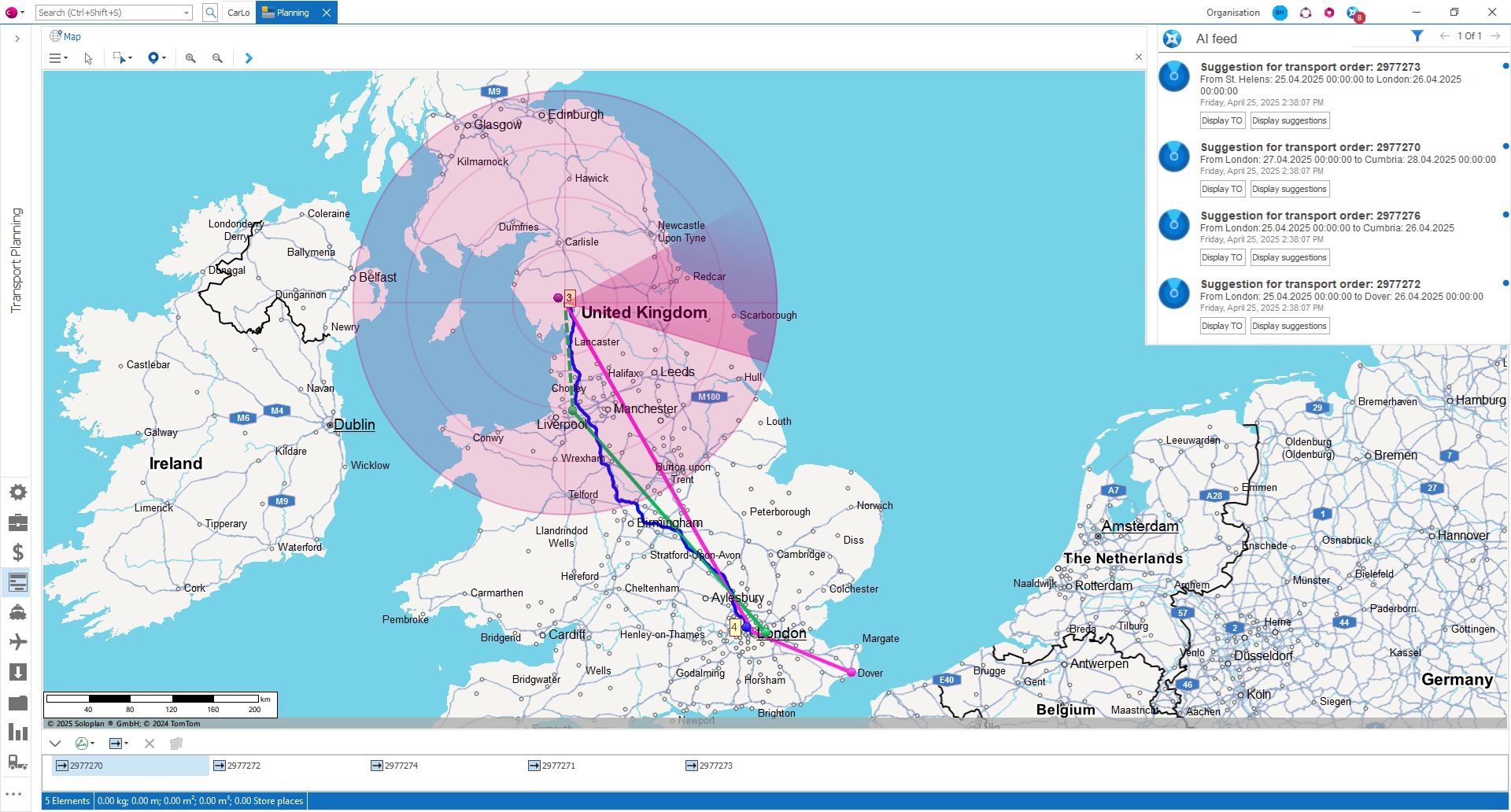
AI is just one of many tools, Redmann tells me. The new ‘Planning Radar’ in CarLo highlights proactive efficiency improvements, whether that be reduced empty distances, optimised vehicle utilisation or less planning effort. The functionality supports dispatchers in planning transport orders faster and more intelligently. The planning radar analyses all open transport orders in real time and displays the best possible combinations directly in the system. Results can be filtered by number and radius. The system automatically recognises previous and upcoming trips as well as return loads.

Soloplan (which stands for Software Logistics Planning) takes an individualised configuration approach by customizing solutions. “We only have 1 TMS,” Redmann states, “but without changing source code we can change all the jobs in the system.” The company has 1700 worldwide customers, predominantly hauliers with fleets of 50-500 trucks, doing FTL and LTL, palletised, tank or bulk freight transport. There are 33000 CarLo users, supported by 260 Soloplan staff across seven offices in Germany, Spain, France, Poland and South Africa.

Its competition is not just other TMS providers, but spreadsheet usage by smaller hauliers. ”We look at how digitized a customer is and how many manual processes they have,” says Redmann, “to find the right resource for each job – such as route planning. Individual benefit outweighs data functionality.” Customers buy CarLo (Cargo Logistics) via a one-time license fee, rather than SaaS. This means a higher upfront cost, but lower total cost of ownership.

The new customer search in ‘Planning Radar’ automatically suggests clients for whom appropriate return loads have regularly been carried out in the past. If no match is found, freight exchanges such as TIMOCOM or Trans.eu can be connected to directly. Here as well, the return load search takes place automatically and with only one click. Some hauliers prefer to use their own network, some need external transport resources. The TMS integrates with telematics partners like Samsara and has additional features for WMS, fleet management, cross docking and driver communications.

After planning a trip, the Planning Radar, with its intelligent search functionality and chatbot, assists in finding the most suitable vehicle. Factors such as the proximity to the loading location, the costs per vehicle (weight, fuel consumption, wear and tear) or the properties of the semi-trailer (dumper, tank, tarpaulin, excess width) play a role. The transport company can specify the cost components per vehicle itself. Vehicles used in the past for similar combinations can be another criterion. This way, AI helps identify hidden optimisation potential which otherwise may have remained unrecognised.

The planning radar graphically displays suggestions on the map. The AI feed creates a window next to the map and checks all open transport orders in CarLo. Subsequently, all transport orders for which suggestions have been found are displayed there. Even less experienced dispatchers can plan better and more easily, while avoiding planning errors and staff do not have to deal with the data alone.

Industrial AI Leading with Curiosity

Peter MacLeod meets IFS’s Bianca Nobilo to discuss how human factors such as soft skills are essential to successful deployment of industrial AI.

At the recent IFS Connect Eastern Europe event in Warsaw, where the potential of IFS’s industrial AI took centre stage to a great reception, my conversation in a quiet side-room away from all the hurly-burly with Bianca Nobilo, IFS’s Chief External Affairs Officer, offered a welcome balanced view into the human side of digital transformation. Speaking exclusively with Logistics Business, former CNN anchor Nobilo provided a compelling exploration of how soft skills, ethics, and a values-driven approach can accelerate and shape the adoption of AI across industry sectors, particularly logistics.

IFS, a provider of cloud enterprise software, has made significant strides with its AI-powered platform, IFS.ai. This technology helps organisations optimise efficiency, increase uptime, and make real-time, data-driven decisions. But Nobilo is keen to emphasise that successful implementation isn’t only about tools, but also mindset.

“One of the most important traits we see among companies ready to embrace AI is curiosity,” she said. “Curiosity means you’re less afraid of change, more willing to challenge outcomes, and open to rethinking the way things are done.”

Nobilo, who early into her tenure of her executive position set up a Think Tank within IFS to explore questions around innovation, ethics, and wellbeing, stressed that while technical knowledge is important, soft skills like self-motivation and communication are essential in today’s AI-driven workplaces. “As AI becomes more prevalent, we risk cognitive offloading, namely depending too much on it and losing our own creative or critical abilities,” she explained. “That’s why self-monitoring and thoughtful use of AI are vital. It’s about knowing when to use technology and when not to.”

Communication, particularly in an era of hybrid work and digital collaboration, also stands out. “Introducing AI and digital workers can further reduce human interaction. So strong communicators – people who can cohere teams, articulate problems and solutions, and even prompt machines effectively – will become more valuable.”

These insights align with broader IFS goals. The company’s Industrial AI offering is deeply embedded in sectors such as manufacturing, aviation, and logistics, industries where safety, uptime, and human oversight are critical. At the Warsaw event, IFS showcased success stories from companies using AI to reduce downtime, predict maintenance needs, and streamline operations. But Nobilo pointed out that technology alone isn’t enough. “There’s fear and lack of understanding, especially among SMEs. That’s an invitation for us to step up and demystify the ROI of AI.”

Industrial AI

That bridge between industry and policy was also a focus of Nobilo’s meeting with Dariusz Standerski, Secretary of State at the Polish Ministry of Digital Affairs, the day before her interview with me.

“In that meeting, logistics and supply chain came up as the top area in Poland where AI can make an immediate, measurable impact. Governments want to know how to build policy around AI that benefits national infrastructure, security, and the economy.”


However, the global AI race raises complex ethical issues. Nobilo (pictured, below) flagged regulatory lag as a top concern. “The technology is moving faster than governments can legislate. We see challenges around transparency, bias, explainability, and data sovereignty. Without proper AI literacy, users can’t give true consent to its use.”


On cybersecurity, front-of-mind at the time of our meeting thanks to the troubles encountered in the UK by M&S, she was unequivocal. “It’s Janus-faced in almost every sense. AI is both the threat and the defence. Some of the best tools to monitor systems are AI-based. But as we move toward quantum computing, we’ll need equally advanced AI to safeguard critical infrastructure.” The conversation ended with a reflection on social mobility and education. “Traditional career paths are being upended. It’s not about a specific STEM degree anymore. It’s about adaptability, about skills that allow you to thrive alongside evolving technology, not be replaced by it.”

As the logistics sector faces rapid transformation, voices like Nobilo’s are essential. Her perspective reminds us that while industrial AI may be driven by machines, its future is still very much human. That’s particularly reassuring to hear at a time when AI and automated processes seem to dominate every conversation I have.

PODCAST: Why 3PLs & Retailers are Ditching Legacy WMS

In this episode of our podcast, Logistics Business Conversations, host Peter MacLeod talks with Smitha Rafael, Chief Product & Delivery Officer at SnapFulfill, about why many 3PLs and retailers are abandoning outdated warehouse management systems (WMS) in favor of modern, cloud-based solutions.

Legacy systems often lack the scalability, flexibility, and integration needed in today’s rapidly evolving supply chain. Smitha shares how modern WMS platforms:

  • Enable rapid scalability for multi-site and global operations.
  • Integrate seamlessly with ERP, TMS, and warehouse automation.
  • Empower users with self-service dashboards and rule-based workflows.
  • Boost efficiency by reducing manual labor, improving ROI, and speeding customer onboarding.
  • Support sustainability by eliminating paper processes and optimizing packaging.
  • Prepare businesses for the future with AI-driven insights and easy tech adoption.

Smitha also stresses the importance of selecting a flexible WMS partner and managing organizational change effectively to unlock the full potential of these solutions.

Saudi Robot Automation Partnership

Starlinks, a global logistics technology leader, has strengthened its long-term automation strategy with the successful completion of its first large-scale robotics deployment in partnership with Geekplus. The project, driven by surging fulfilment demand in the region, builds on Starlinks’ commitment to operational excellence through its Solutions division’s Design–Build–Operate–Transfer (DBOT) model.

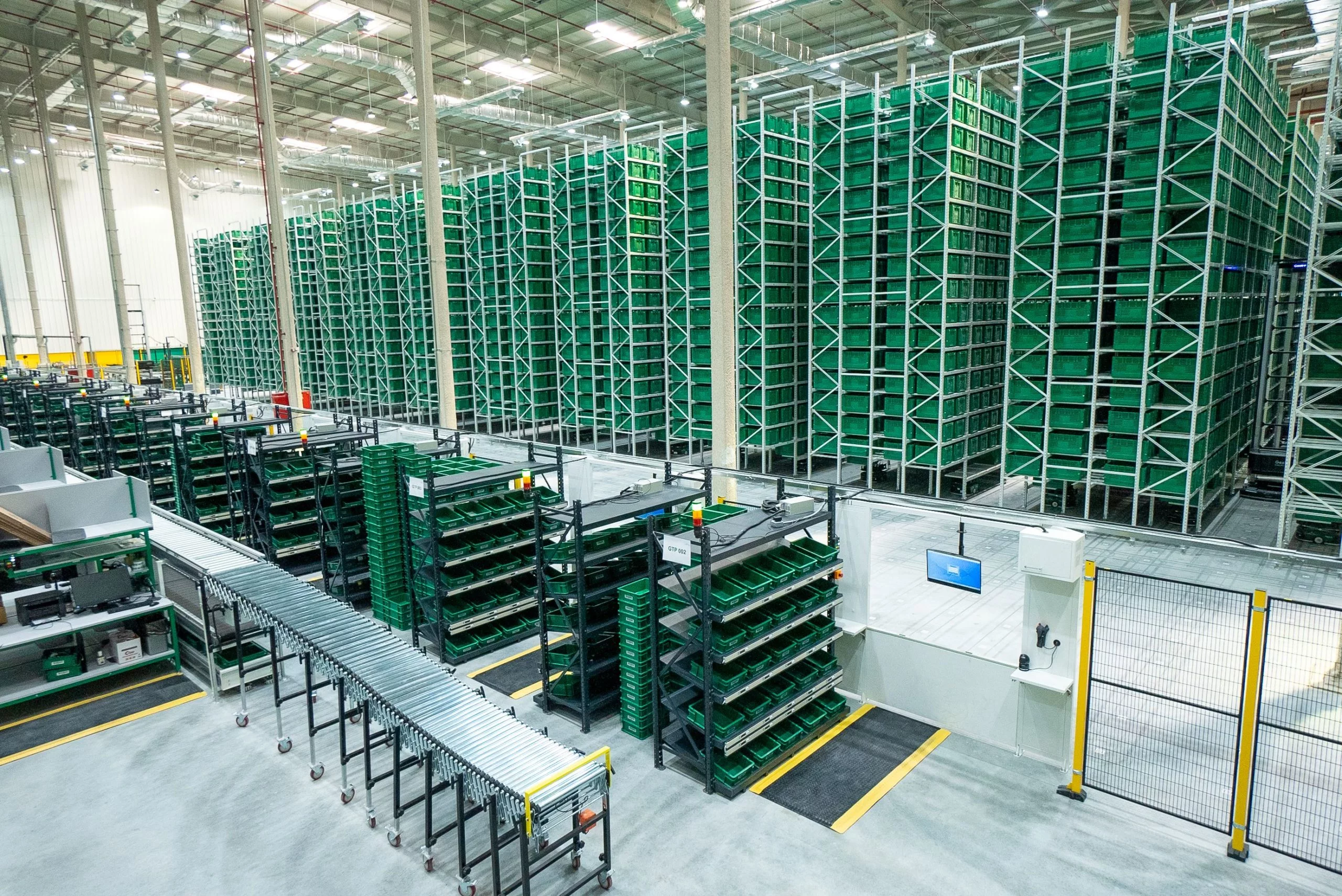
The Riyadh distribution centre now operates with a fully integrated Geekplus RoboShuttle8 system alongside advanced sorting solutions. Designed for high-density, high-throughput operations, RoboShuttle8 combines flexible Tote-to-Person automation with vertical storage capabilities of up to 12 metres unlocking capacity and efficiency without the complexity or capital costs of fixed infrastructure.

Since the beginning of the deployment, the system has delivered measurable operational gains. Which has achieved:

  • Up to 3x the normal picking speed
  • Up to 4x the storage density
  • Nearly 2 percentage points improvement in picking accuracy compared to manual operations
  • A fleet of 39 RoboShuttle8, 126 P40, and 90 S20C robots now in operation

These results reflect Starlinks’ selective approach to optimising automation performance, with goods and stowing strategies carefully chosen to maximise output.

“Our DBOT model means we own the full lifecycle, from design to operation, ensuring that automation isn’t just deployed, but truly embedded into our customers’ success stories,” said Makrem Kadachi, Managing Director of Solutions and UAE at Starlinks. “This partnership with Geekplus shows how we combine operational expertise with best-in-class technology to deliver sustainable, scalable performance gains.”

The RoboShuttle’s hybrid AMR design allows it to operate seamlessly across multiple storage heights, combining the adaptability of mobile robotics with the space efficiency of traditional AS/RS systems. Its modular architecture also enabled the smooth integration of a sorting solution into the existing picking workflow critical for e-commerce operations where order patterns and volumes shift rapidly.

“The success of this project highlights the strength of our RoboShuttle solution for the e-commerce sector,” said Wayne Tai, Sales Director for the MENA region at Geekplus. “It offers the agility and scalability that fulfilment operations need to achieve same-day delivery, particularly in fast-growing markets like the Middle East.”

With phase one complete, Starlinks and Geekplus are set to deepen their automation partnership, focusing on further operational gains and reinforcing their shared vision of shaping the future of tech-enabled logistics in the region.

Connecting Trailer Logistics

The trajectory is firmly upward for Europe-wide multimodal specialist Ewals Cargo Care. Paul Hamblin meets the UK team.

It’s a long way from one man with a horse and cart in a Dutch town to 28 offices, over 2500 employees in 14 countries, and thousands of movements to the furthest reaches of Europe and back every day of the year.

But that is exactly what Ewals Cargo Care has achieved. The multimodal specialist founded as long ago as 1906 by Alfons Ewals is still family-owned, the fourth generation now overseeing an impressive growth trajectory currently comprising 4650 trailers and an accompanying control tower suite to optimise customer supply chains.

This year sees the company consolidating its ambition with a refreshed brand identity, logo and mission statement – all unveiled at Transport Logistic Munich in June – as well as an expanded website by which visitors can better navigate the range of logistics services the company now offers. “It’s not about relaunch, it’s about refinement, honouring our legacy and highlighting our future direction,” explains Michael Brand, Regional Marketing and Communications Coordinator.

The company wanted to better reflect the depth and expansion. “Two years ago, we had a network of 3800 trailers, now it’s over 4500,” he adds. “The plan is to keep increasing and the next target is 5000 – and the reason the trailers are being acquired is because the business continues to expand.”

Mega Trailer Innovator

It’s also about raising awareness. “We’re a bit of a best-kept secret in many ways,” he reflects. “Yet the Mega Trailer is something we co-created in collaboration with the automotive industry.”

The Mega Trailer is a key weapon in the ECC armoury, because its extra volume provides three precious wins for clients – shipment economy, fuel economy, and sustainability gains.

Those wins dovetail neatly with the company’s new mantra: Care, Connect, Move: “We don’t just transport cargo; we take care of it. We care for our customers, their cargo, and each other. It’s in our DNA.”

Austen King is the UK/Ireland Sales Manager and responsible for what is a key market for the company. He says that the ability to understand customer requirements deriving from years of experience is at the heart of the company’s success. A second crucial ingredient is versatility. The company’s size and reach mean it can react fast to changing circumstances – and all logistics transport professionals know what a vital quality that is.

“We are predominantly unaccompanied and that means that we have many options,” he explains. “Contingencies are a big thing for us; we can provide alternatives very quickly if needed. For instance, here in the UK we utilise at least 10 different ports, shipping via options in Holland and Belgium, also Portugal, Bilbao, Santander, Gothenburg; I could go on. We can pick up and deliver as the customer wants it to suit their needs and circumstances.”

Modal Shift

At the heart of the model is The Modal Shift, driven in part by the sustainability agenda. National and International regulators, as well as end consumers, are requiring businesses to reduce carbon emissions to meet global targets, and the transport industry is a key focus area for change.

“There are so many ways we can help make a difference,” says Austen King. “The biggest emissions savings come from utilizing short-sea and rail over direct road options but also, for instance, by better exploiting the shortest distances Let’s look at an example. Say you’re loading at Manchester, the quickest route is to Immingham then across to Zeebrugge by short-sea. If you had chosen to drive down to Folkestone to cross at Calais and then drive up through Belgium, your emissions are already higher. The point is that small tweaks applied in the right areas can be as important as the larger changes, but only if you have the network reach.”

Michael Brand adds: “Savings from 10-15 per cent all the way up to 60 per cent are possible with The Modal Shift. And it shouldn’t be forgotten that mode switch can also help address issues with driver shortages.”

ECC says it recognises its own commitment to sustainability in the trucking fleet it deploys to move trailers, currently comprising 700 own tractor units and 1200 subcontractors. All vehicles within the fleet and those sub-contracted are of Euro VI standard. This also ensures they are ready and able to use HVO 100, a biodiesel which can further reduce total emissions by up to 90%. ECC says it is an option which can be deployed into clients’ existing supply-chain operation today with minimal disruption.

Success in logistics is about adapting to industry changes and customer needs on a rolling, continuous basis. Austen King points out that this underpins the Ewals growth story as it evolves its customer base.

“We have a long history with the automotive industry,” he recounts. “Over the past five or six years we’ve increasingly moved into other areas such as recyclables, chemical, paper and packaging, as well as general industrial, even solar farm projects. The point is that we can take on massive projects reliably for the customer and meet their capacity needs due to the size of our fleet.”

Changing consumer habits have brought opportunities in new areas.

“Fashion and ecommerce, for example, require quick turnaround traffic. Our connections, our local trucking bases close to hubs mean that we can do that for them. We can take deliveries from the Far East off the train in Budapest, but we can also use those locations as switch points to bring goods to UK.”

Eastern Europe has become a significant area in European logistics, he reflects.

“There is now a lot more fleet in Eastern Europe, and Turkey is a big growth area, but they are a long way from the UK. A lot of this activity stems from changes in the automotive industry. These longer transit times mean we need more trailers in the network to cope with the volumes, and Mega Trailers are perfect for it. Morocco is another location we see coming into play in the future, continuing the trend of integration at the EU’s limits.”

Warehouse on Wheels

Significantly, ECC does not maintain a warehouse roster beyond two sites in Venlo (Netherlands) and Zeebrugge, preferring instead what Austen King (pictured, below) calls a “warehouse on wheels” concept.

“Any touching of cargo brings cost,” he argues. “What we can do is to optimise transit times to the customer’s advantage. An example might be to use a long ferry from Spain to the UK. Yes, the journey will take 10 days, but I have the network to cope with that and, importantly, those are 10 days when the shipment is not in the customer’s warehouse. And as soon as it’s in a warehouse, that’s cost. This is why we always have detailed conversations with clients to ensure they get exactly what they want and need.”

Meanwhile, he is delighted with growth in the UK/Ireland territory:

“We’ve seen double digit growth year on year, we’ve doubled headcount to almost 80 people and we moved to newer, bigger offices in 2023.”

The company is not resting on its laurels, though.

“That growth has enabled us to provide renewed focus on our LTL offering and on our Control Tower services,” he reveals. He says the LTL potential is high, given the company’s cross-Europe coverage, and its own, integrated, sustainable assets backed by the local expertise in those 29 offices in 14 countries.

Does he see any threats?

“Input costs keep rising, so there is always pressure on us to keep costs down for customers. Road charges, tolls, you name it: we get over one obstacle and then another one comes along. But we’re not alone in that, so that’s a consolation!”

Keeping cool under pressure

A cold store specialist is maximising uptime thanks to a new fleet of forklift trucks. Industry expert Cold Move has over 65 years of experience in temperature-controlled storage solutions. The family-owned organisation has grown from humble beginnings selling frozen produce from a garage, to serving food manufacturers and exporters worldwide from its dedicated cold store site in Oswestry.

But fast-paced operations require reliable materials handling equipment. So, when incumbent contracts ended, Cold Move turned to its local Mitsubishi Forklift Trucks distributor to design a dedicated, fit-for-purpose fleet.

Downtime is not an option

Cold Move faced significant challenges as it has a small site with no room for spare equipment, so trucks need to be working at all times. Plus, operational temperatures reach as low as -22°C in the cold store, which can affect truck performance over time.

For Cold Move, it was important to involve the drivers and operational team in the decision-making process. Mitsubishi Forklift Trucks offered open dialogue, flexibility, and trial options to ensure everyone was happy before they committed, and all feedback was accounted for.

Simon Williams, Site Director for Cold Move said: “We are not a large retail distribution centre, and do not have room for contingency equipment, so downtime is not an option. We had already been using Mitsubishi counterbalance and reach trucks for some time, and were impressed with them, so we were keen to see other equipment. But just as importantly, we wanted to build a solid partnership with our supplier. Which is exactly what we got.”

Built for extremes

In total, Cold Move now has 17 units from Mitsubishi Forklift Trucks. Four SENSiA reach trucks, which work predominantly in the cold store racking, have heated cabs to enable the drivers to work comfortably over long hours. Three electric EDiA EM counterbalance trucks are used for a variety of tasks throughout the site, such as loading containers and moving pallets. For these trucks, Cold Move chose blue lights for added safety and a mini steering wheel for better ergonomics.

“Operator safety is the most important thing for us, and it was great that we could add features to the trucks where needed,” said Simon. “We have a lot of machines working in a confined area but we’re proud to say we have an exceptional safety record.”

For unloading and loading vehicles, Cold Move has eight ride-on PREMiA EM platform power pallet trucks with fixed platforms and long forks, as well as two PREMiA ES pedestrian power pallet trucks.
Mitsubishi Forklift Trucks also advised on the most efficient battery system for a cold environment to ensure there was minimal downtime during battery changes.

Andrew Murray, National Accounts Manager for the Mitsubishi Forklift Trucks distributor said: “Creating a good working relationship is fundamental. We worked closely with Simon and his team at Cold Move and invested time to establish what the drivers needed. From looking at the chassis size to discussing fixed platforms, we wanted to create a fleet that accurately reflected the site’s constraints.”

A trusted partnership

Mitsubishi Forklift Trucks manages a full-service package, including monthly reports and account management. This service support will help Cold Move make informed decisions about its fleet and control what happens to each truck throughout its lifetime.

Summing up, Williams said: “The drivers are very pleased with the trucks, and the service package will be helpful now we have a larger fleet. We’re also grateful for the amazing input we’ve had from the engineers. They go above and beyond every time we put a call in. Overall, Mitsubishi Forklift Trucks made the process as seamless as possible. Andrew and his team took every detail into account to get the right spec. They went to the effort to solve the problems we faced. It feels like we have a partner we can trust.”

Sent to and from Multi-User Warehousing

Cross Point Business Park in Coventry, UK, is home to a new multi-user DC featuring a high degree of automation equipment. David Priestman took a look.

Teenage girls go mad for the beauty and make-up retailer Sephora – I have first-hand knowledge of that! With 34000 products the company requires a fast-moving third-party logistics omnichannel operation that manages both ecommerce plus deliveries to the seven UK stores every other day. 30% of UK consumer purchases are now made online.

DHL Supply Chain provides this nationwide service from Coventry over three mezzanine floors of storage, picking, packing and despatch. With an average of 7000 consumer orders a day the ecommerce operation is busy all afternoon and evening. From the inbound area all products are checked, scanned-in and put away. The warehouse control and inventory management process is data intensive. DHL manage that as well as constant analysis of the warehouse layout, looking at fast-moving items and juggling the varying demand for beauty products, subject to swings in trends and loyalties. This enables products to be stored in high or low priority areas.

Pick of the Bots

The picking operation makes good use of ‘Chuck’ ‘follow me’ robots (pictured, top). 45 of them are leased from Ocado (OIA). The Chucks are used for building the customers’ orders, using software developed by OIA. The software tells pickers what cardboard boxes should be used for each order. The bot then drives along the pre-determined route and knows where to go, leaving the (human) picker to simply take each item, scan and place in the right box. Each Chuck is named after a famous singer, with my favourite being ‘Bowie’, which was taking a well-earned rest when I visited.


DHL has cleverly built its own automated packaging machines here that close, glue and label each completed box lid, handling 60% of the ecommerce packages here that are taken by conveyor to outbound. Before the consumer changes her mind, no doubt.

Hot SKUs

DHL Supply Chain (just one part of the global behemoth) has 180,000 employees, 1600 DCs in 50 countries and a 3PL market share of 6%. In the UK it operates 5000 lorries and vans, 450 DCs with 36,000 staff. “Global trade is still growing and is the life blood of our expansion,” UK & Ireland CEO Saul Resnick states. “Retail is in a state of flux. They need us to be fast and innovative. We offer them enterprise diversity without the logistics footprint.”

The company is committed to automating its warehouse processes as much as possible. Tim Tetzlaff is its head of Digitalization and Automation. “Innovation is only real when it is scaled,” he says. Warehouse space is at a premium, as is labour, and customer expectations continue to rise. Tetzlaff’s role is to oversee the selection of technology and then scale it – picking bots, goods-to-person systems, AMRs, AI and more. Ideas lead to research then proof-of-concept, productization, commercialization and finally the modular standardization of all automation for rolling out globally.

Reaching Out

Boston Dynamics new ‘Stretch’ bot (pictured, below) unloads pallets, lifting boxes on to conveyors. It constantly photographs packages and processes these to understand what is next and the trajectory of each manoeuvre. With a weight limit of 23kg it is being tested by DHL for use cases. With 10 currently deployed, the goal is to operate 1000 of them by 2030. Faster than a human at 600 cases per hour, it will replace ‘back-breaking’ work in (often) cold environments.

“We have a vision on where we allocate our labour; approximately 25% on putaway and replenish, 35% picking, 10% packing,” Tetzlaff explains. “It’s not about replacing people but changing their roles from strenuous, repetitive physical tasks, to managing robots. Managers and planners oversee both people and bots, using data for insights on-site. We want to be the best integrator of people, bots, IT and analytics for flexible stability, seamlessly integrating tech and data to continually and dynamically optimise operational service delivery.” Now that would be modern beauty.

Forklift Fork Grip Solutions

As the Industrial Material Handling and Logistics Exhibition (IMHX) is just around the corner, from September 9-11th, one exhibitor, GenieGrips® is gearing up to showcase its innovative grip and safety solutions for the warehousing and logistics industry, on stand D01. With a focus on improving safety and efficiency, GenieGrips® is a trusted partner for businesses looking to enhance their material handling operations.

GenieGrips® is an Australian company, headquartered in Melbourne, Victoria. With a strong focus on innovation and customer service, the company has established itself as a leading provider of grip and safety solutions in the Australian market. However, GenieGrips‘ reach extends far beyond Australia, with distribution networks in the USA, Europe, and the UK. This global presence allows the company to serve customers worldwide, providing high-quality solutions tailored to their unique needs.

Global Reach, Local Expertise

GenieGrips’ international distribution network is built on partnerships with local experts who understand the specific demands of each region. This ensures that the products are adapted to meet the unique conditions and regulations of each market, providing customers with solutions that are both effective and compliant.

Product Highlights

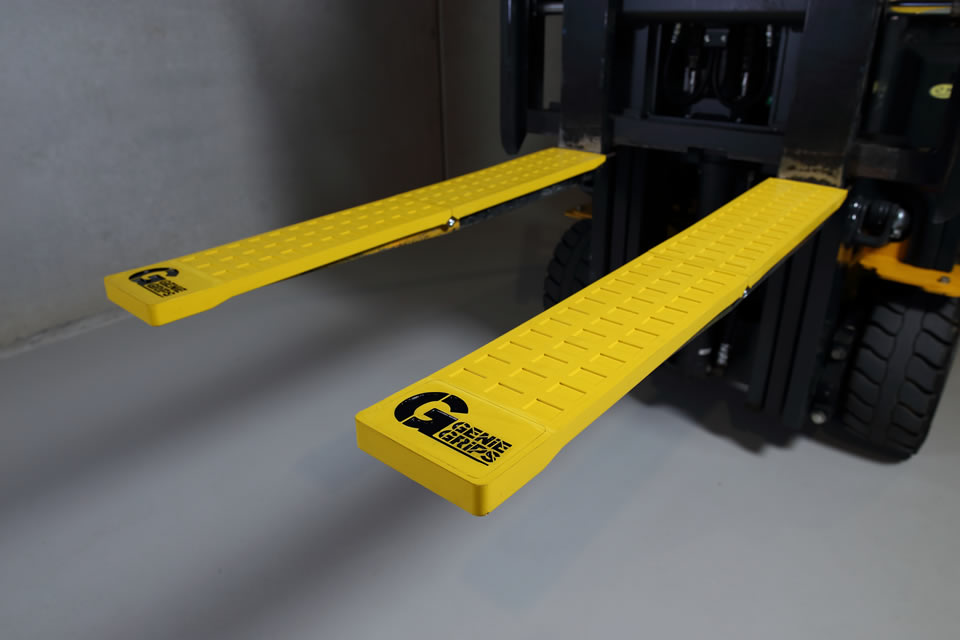
GenieGrips® Mats create a high-friction surface on forklift tynes, preventing slippage that can cause sudden load shifts
GenieGrips® Cushions absorb impact, reducing the shock transmitted and reducing noise.
GenieGrips® Caps shield goods – and people – from the damage that exposed steel tynes can cause.
GenieGrips® Stik-It Pads offer a quick, adhesive-fit solution to protect loads from slippage and prevent surface abrasions.
GenieGrips® Loading Mirrors improve operator visibility, reducing blind spots and making manoeuvring safer in tight or busy warehouse spaces.

Podcast

Director Louise Inglese will be one of our Editor Peter MacLeod’s guests on the Logistics Business Conversations Podcast booth (stand B110) at IMHX. They will be discussing themes including the importance of safety in logistics; industry trends and challenges; innovative solutions for the warehouse; the role of technology in improving safety; and future developments.

As the IMHX Expo approaches, GenieGrips® is poised to showcase its innovative grip and safety solutions. With a focus on improving safety and efficiency, the company is proud to offer high-quality, tailored solutions to customers worldwide.

Subscribe

Get notified about New Episodes of our Podcast, New Magazine Issues and stay updated with our Weekly Newsletter.