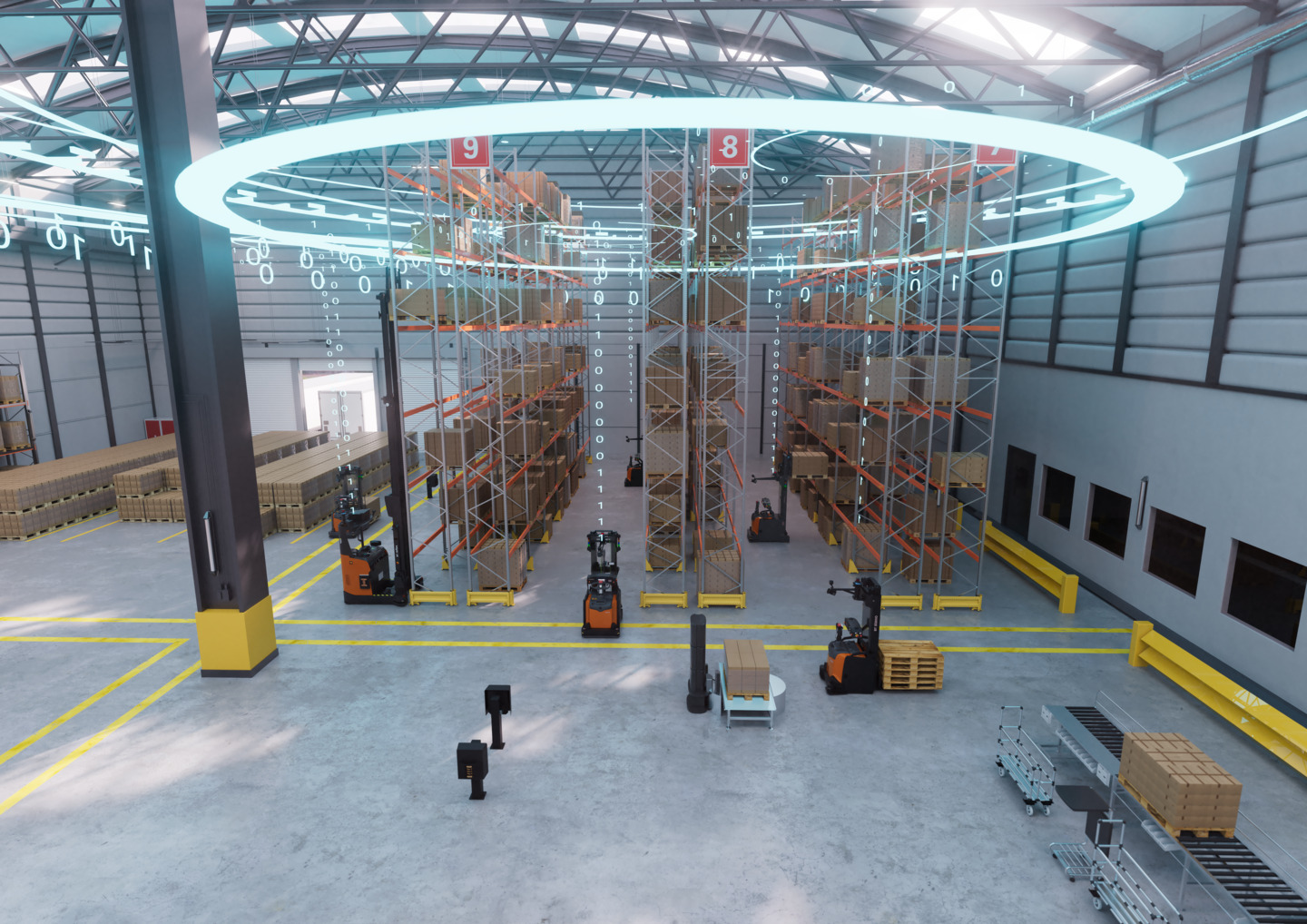
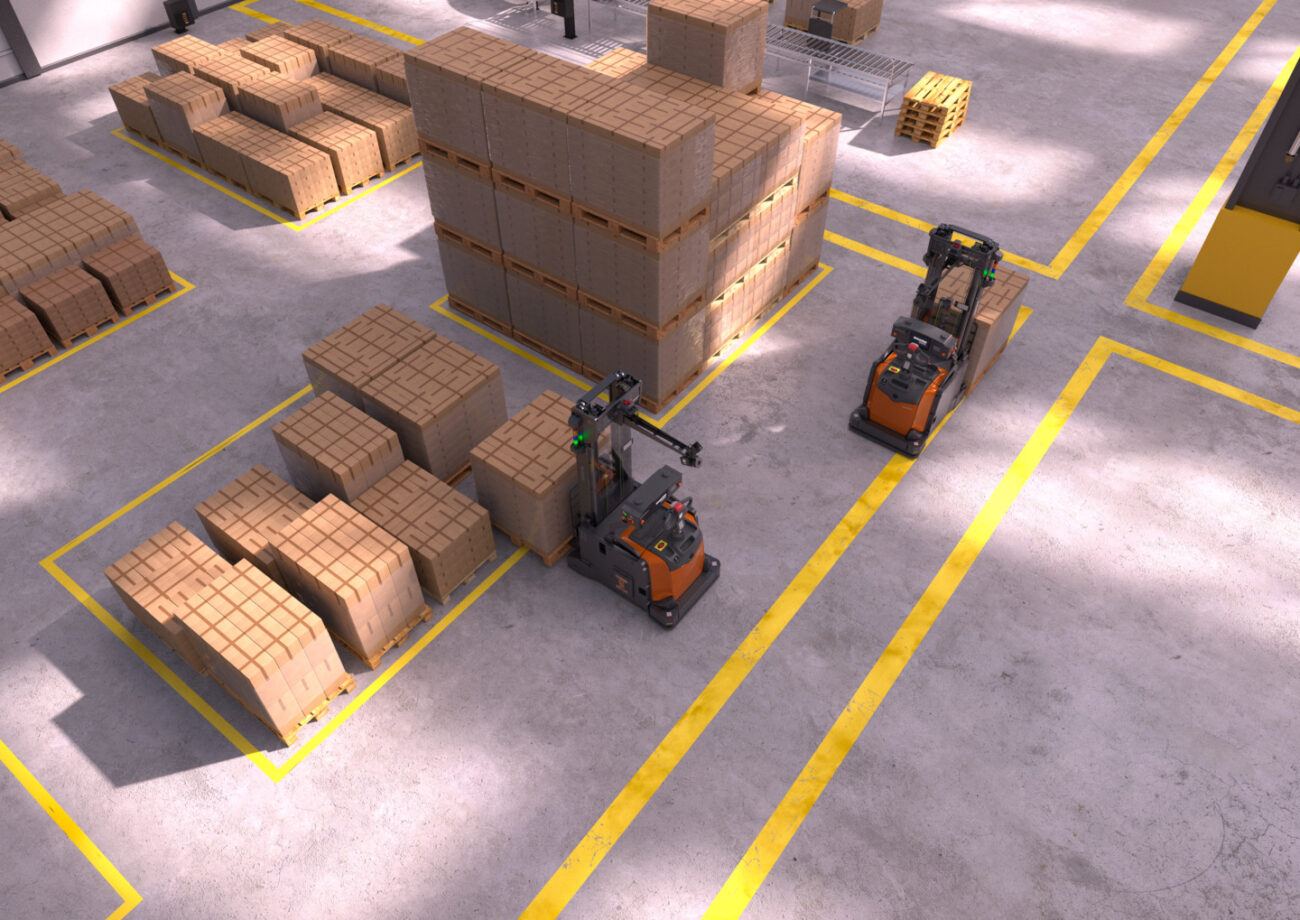
Designed to automate a wide range of warehouse operational flows, Swarm Automation Transport is a multifaceted automation solution that seamlessly integrates into mixed fleets, simplifying processes, reducing errors and protecting goods from damage. With its latest solution, Toyota Material Handling Europe offers a reliable and scalable automated warehouse transport system that can handle multiple pallet types and facilitates standard and turned pallet loading at low to mid-lift height.
Dynamic, scalable solution for modern warehouse automation
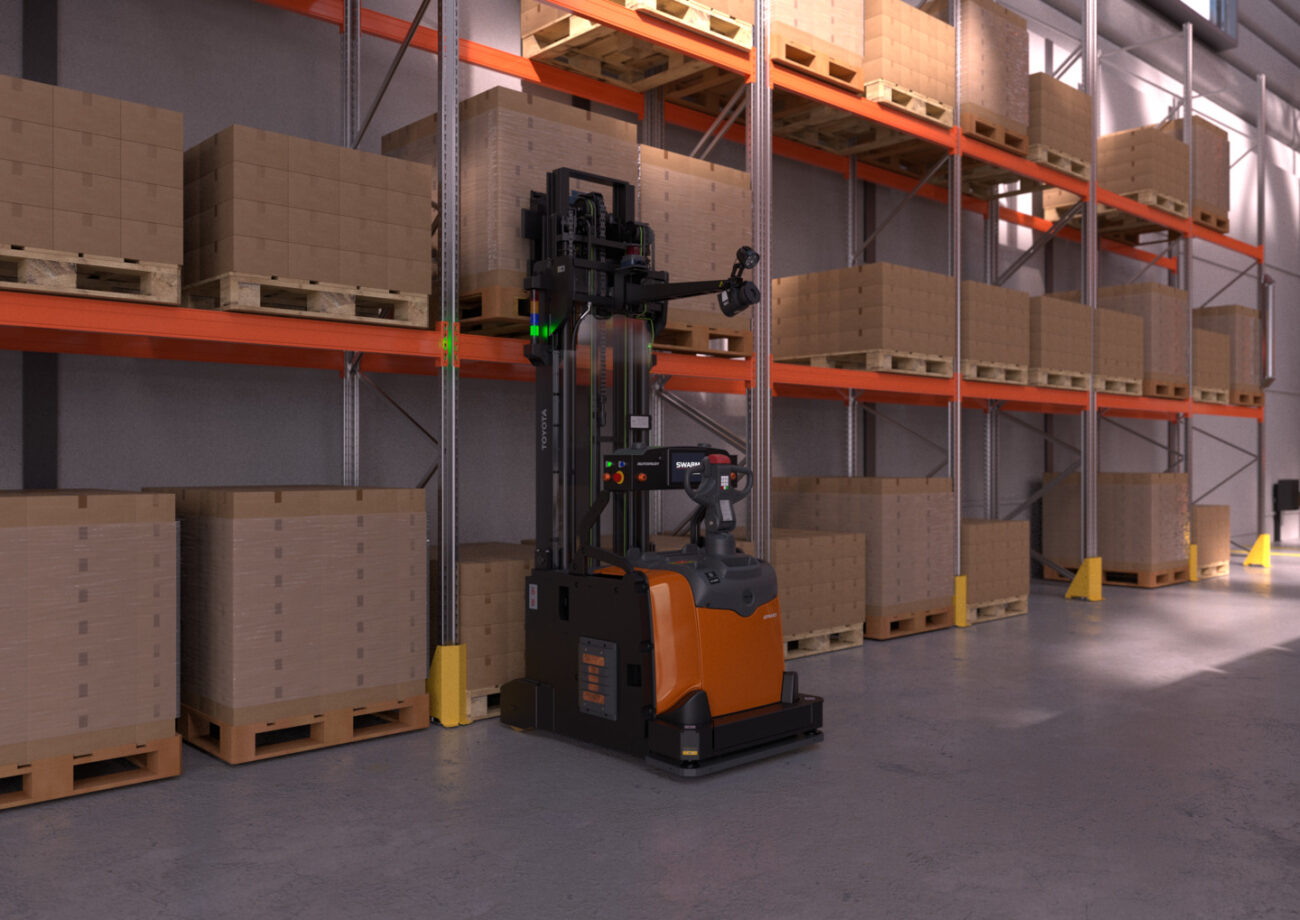
Toyota Material Handling Europe’s automated warehouse transport system combines the Toyota SAI125CB Automated Counterbalance Stacker with T-ONE Control System, intelligent automation software. Swarm Automation Transport easily fits into any major warehouse flow, supporting various warehouse activities and seamlessly integrates into any complex warehouse environment. This holistic solution is particularly valuable for businesses handling multiple pallet types, like euro pallets or bottom-deck pallets, or requiring specific handling procedures such as turned pallet loading.
In support of warehouse efficiency, this new dynamic solution can be deployed for fully automated performance, engineered to operate in sync with other AGVs including Toyota’s automated reach trucks. For businesses combining automation with manual handling, the system supports a hybrid, semi-automated functionality, optimising productivity through effortless coordination with conventional warehouse trucks.
This solution is perfectly suited to a wide range of industries, including warehouse logistics, industrial production and manufacturing, retail distribution and fast-moving consumer goods (FMCG), food retail, as well as other dynamic sectors such as parcel delivery, airport operations and e-commerce.
Transport and storage for conventional racking
Swarm Automation Transport offers a practical and cost-effective solution for businesses looking to start their automation journey. Ideal for stacking near conveyors or cells, this solution can also benefit existing automation users who aim to maximise their ROI, as it integrates easily with different fleet types. Pallet storage can be done up to 5 m in height, with a maximum of 12 m when paired with other Toyota automated reach trucks.
“Swarm Automation Transport marks a major step in our mission to make automation accessible to every warehouse,” says José Maria Gener, Vice President Sales & Marketing at Toyota Material Handling Europe, “By combining the strength of our automated counterbalanced stacker with the intelligence of our automation software T-ONE, we’re giving customers a scalable solution that elevates safety, efficiency and performance across their entire operation.”
Further reinforcing its commitment to responsible design, Toyota Material Handling equips its latest solution with high-efficiency lithium-ion batteries and automatic charging capabilities. The result is reduced overall energy consumption, smooth recharging and longer usage cycles. The 360° Personal Protection System integrates sensors, scanners and bumpers for an overall safer experience.
Automation at every level
Swarm Automation Transport is highly beneficial for generating streamlined fully automated and semi-automated workflows. It is also perfect for managing repetitive transport tasks, pallet handling in buffer areas and for optimising replenishment processes.
Their latest automated solution represents Toyota Material Handling Europe’s continued commitment to developing technologies that elevate safety, efficiency and scalability across every layer of the supply chain.
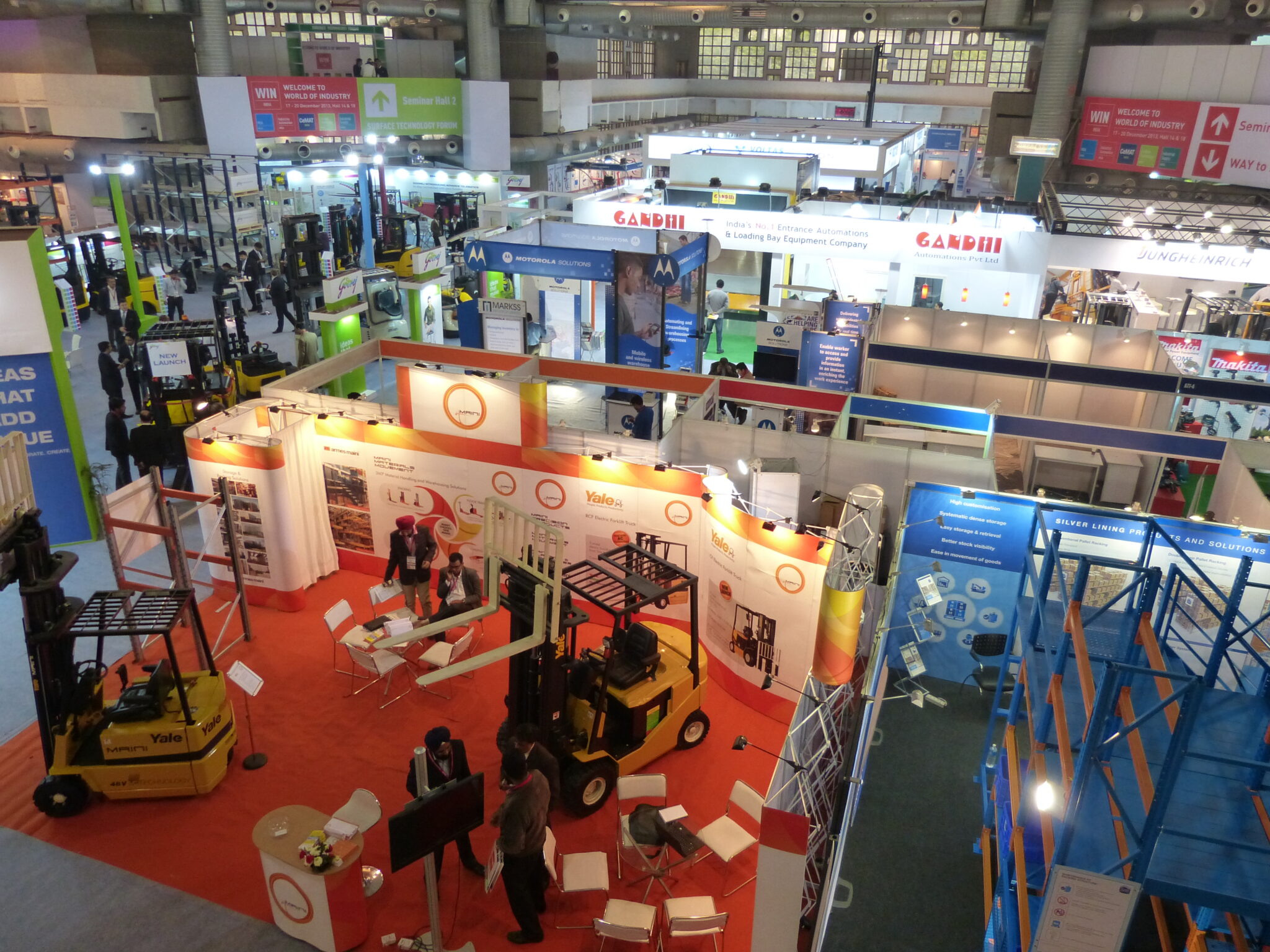
India’s logistics sector is at a decisive inflection point, with automation rapidly reshaping the way goods are stored, handled, and transported, writes Khursheed Alam (pictured, below), Founder, Atmos Systems.
What was once a fragmented, labour-intensive ecosystem is now evolving into a more integrated, technology-driven network. This shift is being driven by rising demand for speed, precision, and scalability in a consumption-led economy. Automation is no longer a future ambition it is becoming central to operational strategy, enabling logistics players to enhance efficiency while responding to increasingly complex supply chain requirements.
A key manifestation of this transformation is the rise of automated warehousing. Advanced systems such as robotics, automated storage and retrieval systems (AS/RS), and AI-led inventory management are redefining warehouse operations. These technologies are significantly improving picking accuracy, reducing turn around times, and optimizing space utilization critical advantages in a market where real estate costs are steadily increasing. More importantly, automation is enabling consistent, high-volume throughput, allowing companies to scale operations without a proportional increase in manpower.
Beyond warehousing, intelligent automation is streamlining end-to-end logistics operations. Technologies such as Autonomous Mobile Robots (AMRs) and drone-enabled inventory tracking are minimizing human intervention, reducing errors, and enabling round-the-clock operations. This transition is not merely about cost efficiency; it is about building resilience, agility, and reliability into supply chains. As India positions itself as a global manufacturing and consumption hub, automation will play a defining role in creating a logistics ecosystem that is faster, smarter, and globally competitive.
E-commerce: Catalysing Tech Revolution of India’s Logistics
The explosive growth of e-commerce is perhaps the single largest driver of this technological pivot. As platforms like Amazon, Flipkart, and quick-commerce disruptors like Zepto and Blinkit redefine consumer expectations, the ‘need for speed’ has become absolute. The Indian warehouse automation market is witnessing a massive surge as players race to trim minutes off their delivery timelines.
To handle millions of stock-keeping units (SKUs) and ensure ‘same-day’ or ‘ten-minute’ deliveries, logistics providers are investing heavily in automated sortation systems and AI-driven demand forecasting. Automation allows these companies to handle seasonal spikes, such as during festive sales, without the logistical nightmare of massive, temporary manual hiring. In this hyper-competitive landscape, the efficiency of a company’s automated backend is directly linked to its customer retention rate.
Building Smart Infrastructure
The transformation is not limited to private enterprises; it is being etched into the very geography of the country. India is seeing the birth of ‘Smart Logistics Parks’, designed to be hubs of interconnected technology. A landmark example is the development of the country’s first smart logistics park in Nagpur by XSIO.
These parks integrate Internet of Things (IoT) sensors, GPS tracking, and automated gate management to create a seamless flow of goods. By situating these high-tech hubs at strategic multimodal locations, India is reducing the logistics cost as a percentage of GDP, which has erstwhile been higher than in developed nations. These smart clusters ensure that once a package is sent out from an automated warehouse, it stays within a digitally tracked, high-efficiency ecosystem until it reaches the end consumer.
A Future-Ready Supply Chain
The integration of robotics, AI, and smart infrastructure is doing more than just moving boxes faster; it is providing end-to-end supply chain visibility. For businesses, this means better data, fewer losses, and leaner operations. For the Indian economy, it signals a transition from a labour-intensive sector to a technology-driven powerhouse.
As automation continues to mature, the challenges of the ‘last mile’ will diminish, and the reliability of Indian exports will rise. By modernising its logistics domain through automation, India is not just catching up with global standards but is building a future-ready infrastructure capable of supporting the world’s fastest-growing economy. The shift from manual to mechanical is well underway, ensuring that the future of Indian logistics is fast, fluid, and flawlessly automated.
Subscribe
Get notified about New Episodes of our Podcast, New Magazine Issues and stay updated with our Weekly Newsletter.